
A suitably sized portable power station can run most domestic fridges, fridge freezers and portable camping fridges. However, the power station itself must provide enough continuous AC output for the appliance while it is running, enough surge output to start its compressor and sufficient battery capacity to meet the required runtime. Once it's up and running, a fridge makes portable power stations highly useful during power cuts, camping trips and journeys in a campervan or motorhome.
Keeping a fridge operating can protect chilled food, maintain access to ice cold drinks and reduce the disruption caused by losing mains electricity. Unlike a petrol generator, a battery power station produces no exhaust fumes at the point of use and can be used indoors when operated according to the manufacturer's instructions.
However, matching your fridge to a power station is not as simple as comparing one number...
Fridges do not normally consume their rated running wattage continuously. Their compressors switch on and off to maintain the selected temperature, and they may require considerably more power for a brief period when the compressor starts. Room temperature, appliance efficiency, door openings and how full the fridge is can all affect energy use.
Battery capacity also needs to be interpreted realistically. A 1,024Wh power station will not usually deliver a full 1,024Wh to an AC appliance because the inverter and the power station's own electronics consume energy. Manufacturers may also retain a small battery reserve to protect the cells. For this reason, calculated runtimes should always be treated as estimates rather than guarantees.
The good news is that many modern fridges have relatively modest running demands, while current portable power stations can offer pure sine wave AC output, fast charging and long-life LiFePO₄ batteries. Models with expandable capacity can provide additional runtime if an outage continues, while UPS functionality can switch compatible equipment from mains electricity to stored battery power automatically.
In this guide, Eco Wizard explains how many watts a fridge uses, what size portable power station you may need and how to estimate runtimes properly. We also cover fridge freezers, mini fridges and 12V camping fridges, along with safe setup and food storage during a power cut.
A portable power station can keep a fridge running if three requirements are met. Its continuous output must exceed the fridge's normal running demand, its surge rating must accommodate the compressor's starting demand and its usable battery capacity must be sufficient for the period of time you need the fridge to run. The power station must also provide the correct type of outlet for the appliance.
Most household fridges use a standard UK three-pin plug, so they require a power station with a 230V AC socket. A DC-only model without an AC inverter cannot run a conventional mains fridge through its normal plug. By contrast, many portable camping fridges accept a 12V DC connection, which can operate directly from a compatible car-style outlet and avoid some of the energy lost when converting battery power to AC.
The four checks to make before connecting a fridge are:
Understanding battery capacity is crucial when choosing a portable power station to meet your energy requirements. Our Complete Guide To Portable Power Stations will unpack capacity vs output and give you a detailed insight into how much capacity your power station will need and how long it will last. You'll then be able to choose a suitable model that will keep your favourite devices and appliances running when you need them most.
The wattage of a fridge varies according to its size, age, efficiency, compressor and operating conditions. A modern domestic refrigerator may draw roughly 50W to 200W while its compressor is running, but this broad range should not be used as a substitute for checking the actual appliance. Larger fridge freezers, American-style models and older appliances may demand more.
Look for the rated power on the appliance data plate, energy label or instruction manual. The plate may give power in watts, or it may show voltage and current. If only volts and amps are listed, multiplying them provides an approximate apparent power figure, but compressor loads and power factor can make this less precise than a manufacturer-stated wattage or a direct energy measurement.
Annual energy consumption on a fridge energy label is useful for estimating average use over time, but it does not reveal the highest instantaneous demand. Dividing annual kilowatt-hours by 365 gives approximate daily energy consumption under the test conditions. It still does not replace checking the running and starting requirements when selecting an inverter.
A fridge compressor operates in cycles. It runs until the interior reaches the thermostat setting, switches off and starts again when the temperature rises. This means a fridge drawing 100W while active does not necessarily consume 100Wh during every hour of the day.
The proportion of time the compressor runs is sometimes called its duty cycle. A well-insulated fridge in a cool room with the door closed may run relatively infrequently. The same appliance may run for longer in hot weather, after warm groceries have been added or when the door is opened repeatedly. Defrost heater elements, fans, ice makers and displays can add further consumption on some fridge freezers.
Refrigerator compressors can require a brief burst of power when they start. This start-up surge may be several times higher than the normal running wattage, even though it lasts only a short time. A power station that appears adequate based only on the running figure may therefore overload or shut down when the compressor attempts to start.
Continuous output and surge output are different specifications. Continuous AC output is the power the inverter can supply steadily, while surge output is the higher demand it can tolerate briefly. The fridge's normal demand must fit within the continuous rating and its start-up requirement must fit within the surge rating.
Manufacturers do not always publish compressor surge consumption. A plug-in energy monitor capable of recording peak demand can provide a more useful real-world measurement, or the fridge manufacturer may be able to confirm the requirement. When the exact figure is unknown, leaving a generous margin above the running wattage is safer than selecting a power station that only just meets it.
There are two separate meanings of size in this context. Inverter size, measured in watts, determines whether the power station can start and run the fridge. Battery size, measured in watt-hours, determines approximately how long it can continue doing so.
For many modern domestic fridges, a portable power station with at least 500W to 1,000W of continuous AC output and a higher surge rating may provide an appropriate starting point - but this is only a general guide. A large fridge freezer or older compressor may require more, while a small, modern and efficient fridge may require less, so always check the particular appliance.
Battery capacities around 500Wh can provide useful short-term support for an efficient fridge, while 1,000Wh to 2,000Wh offers greater confidence during a longer outage. Expandable portable power systems allow extra batteries to be connected when more runtime is required.
The correct choice depends on the fridge's measured energy consumption and whether other devices will share the power station.
Typical capacity choices:
Runtime depends on usable battery energy divided by the fridge's average consumption. A basic calculation is:
Usable capacity is lower than the advertised battery capacity when powering an AC appliance. As a cautious planning assumption, multiplying the rated capacity by approximately 0.8 to 0.9 can allow for inverter losses and system consumption. The actual efficiency varies by model, load, settings and temperature.
Average fridge consumption is not necessarily the wattage shown while the compressor is running. If a fridge draws 100W when active but operates for roughly 40% of the time, its average demand would be about 40W before allowing for other functions and changes in operating conditions. Measuring the appliance over 24 hours provides a better estimate than observing it for a few minutes.
Consider a 1,024Wh power station with an assumed 85% usable AC energy. This provides approximately 870Wh for planning purposes. If the fridge averages 50W over time, estimated runtime would be about 17 hours. If it averages 80W, the estimate falls to roughly 11 hours.
A 2,048Wh power station under the same 85% assumption would provide approximately 1,740Wh. At an average demand of 50W, the theoretical estimate is about 34 hours. At 80W, it is approximately 21 hours.
These figures are illustrations, not promised runtimes. A hot room, frequent door opening, an ageing appliance or the addition of other loads can reduce them significantly. A power station may also shut its AC output down at a set reserve level or consume energy while idle.
Estimated fridge runtime by power station capacity*:
*Examples assume 85% usable AC energy and do not account for unusually high demand, additional devices or reserved battery capacity.
Yes, many portable power stations can run a fridge freezer, but this combined appliance may consume more energy and have a higher start-up demand than a smaller refrigerator. Frost-free models can include circulation fans and an electric defrost heater, while ice makers and water dispensers may add further load.
Check the complete fridge freezer rather than estimating each compartment separately. The appliance data plate and energy label should be the starting point, followed by a real-world energy monitor if possible. Choose a power station with enough headroom for compressor start-up and enough capacity for both chilled and frozen storage.
Keeping the doors closed reduces heat entering the appliance and can extend the time between compressor cycles. It also helps food remain cold if the power station eventually runs flat. Avoid adding warm food during an outage and decide what you need before opening the door.
A portable power station can run a mini fridge, making it a practical solution for keeping food and drinks cool when camping, travelling in a campervan or making it through a power cut. Most mini fridges consume less electricity than full-size models, meaning they can often run from a smaller, lower-capacity portable power station.
How long a mini fridge will run depends on its power consumption and the power station's battery capacity. For example, a mini fridge averaging 30W over time could theoretically run for around 17 hours from a 512Wh power station. In practice, you should expect a shorter runtime due to energy losses and other operating conditions.
It's also important to consider the type of mini fridge you're using. Compressor fridges cycle on and off to maintain their temperature, but can require additional power when starting up. Thermoelectric mini coolers often draw electricity continuously, which can drain a battery faster than expected.
Before choosing a power station, check your mini fridge's running wattage, start-up power requirements and connection type. Standard plug-in mini fridges require an AC socket, while compatible 12V camping fridges can use a DC output, potentially extending battery runtime by avoiding inverter losses.
A portable power station can run a compatible fridge while camping, but the best arrangement depends on the type of fridge and trip. A purpose-built 12V compressor fridge is often more energy-efficient for vehicle and off-grid use than a domestic appliance. Connecting it directly to a regulated 12V output can also reduce conversion losses.
For a short trip, a compact power station may be enough if the fridge has low daily consumption. Longer stays require more battery capacity, a dependable way to recharge or both. Portable solar panels can replenish energy during daylight, while vehicle charging may help between campsites. Solar output varies with weather, shade, season and panel angle, so it should not be assumed to replace every watt-hour the fridge consumes.
Keep the power station and its connections dry, ventilated and protected from direct heat. Do not place the unit inside a sealed storage compartment while it is operating or charging. Check campsite rules before using electrical equipment and follow the instructions supplied with both the fridge and the power station.
If you want to discover the best portable power stations for camping, we'll not only reveal the power units you need to consider, we'll also delve into the capacity requirements and key features you need to know about if you're thinking about taking your portable power station to the campsite.
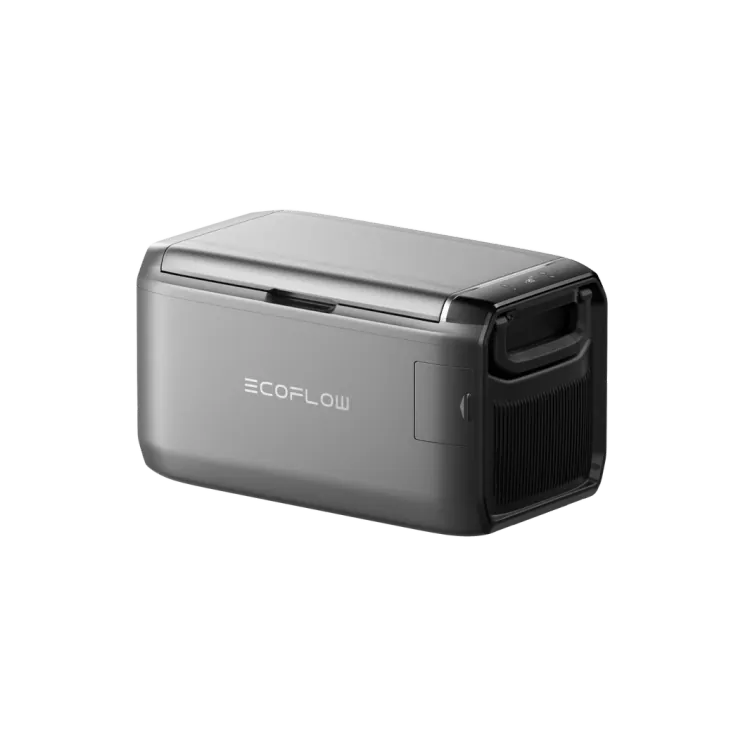
Some portable power stations offer a UPS (uninterruptible power supply) or backup mode. This feature is particularly useful for keeping your fridge running during an unexpected power cut, especially if you're away from home or asleep when the electricity goes off.
When connected to a compatible power station with UPS functionality, your fridge normally receives electricity from the mains supply. If a power cut occurs, the power station automatically switches to its internal battery, allowing the fridge to continue operating without you having to reconnect it manually.
The main advantage is protecting your refrigerated food during longer power cuts. Although a closed fridge can keep food cold for several hours without electricity, maintaining power helps preserve a consistent internal temperature and reduces the risk of food spoiling.
Before relying on UPS mode, check that your portable power station supports continuous connection to the mains and can handle your fridge's running wattage and start-up surge. It's also worth checking the battery capacity, as this determines how long your fridge can continue operating once mains electricity is unavailable.
For further information on UPS functions, power cuts and emergency home backup, our Complete Guide To Portable Power Stations will help you get your backup power setup ready if the mains fails.
Choosing the right portable power station for your fridge means finding a model with enough power to start the compressor, sufficient battery capacity to keep it running and reliable recharging options for extended power cuts.
Key features to look for include:
Connecting a fridge to a portable power station is straightforward, but taking a few safety precautions beforehand helps protect your appliances and ensures everything operates reliably. Start by placing the power station on a stable, dry surface with plenty of ventilation. Make sure it's sufficiently charged and check that its AC output and surge capacity can handle your fridge's power requirements.
Where possible, plug your fridge directly into the power station's AC socket and avoid using unsuitable extension leads or multiway adaptors. Never attempt to power your home's electrical circuits by connecting a portable power station to a wall socket. A whole-home or fixed backup connection requires compatible equipment and professional installation to ensure electrical safety.
Once connected, check the power station's display as the fridge compressor starts to make sure there are no overload warnings. Monitor electricity consumption over a few cooling cycles to get a better idea of how long the battery will last. Testing your setup before an unexpected power cut is a sensible safety precaution, helping you identify potential compatibility or power issues before you need to rely on your backup supply.
Reducing the fridge's energy demand can extend runtime without increasing battery capacity. The most effective step is keeping the door closed as much as possible. Every opening allows cold air to escape and warm, moist air to enter, forcing the compressor to work harder.
Other ways to extend runtime include:
Running a fridge from a portable power station can help preserve food, but the battery display alone does not confirm that food has remained safe. Use a fridge thermometer and keep the appliance at the recommended temperature. If power has been interrupted, minimise door openings and always follow the up-to-date official food-safety guidance.
The Food Standards Agency advises that a fridge can keep food chilled for up to four hours during a power cut, provided the door remains closed. However, this is an estimate and depends on the appliance and surrounding temperature. Fridges should normally be kept at 5°C or below, but during a power cut, chilled food can be stored at temperatures below 8°C. If the temperature reaches 8°C or above, food that requires refrigeration should be eaten within four hours or discarded, if the power has not been restored within that period.
A full freezer can keep food frozen for up to 48 hours with the door closed, while a half-full freezer may maintain safe frozen storage for up to 24 hours. These are estimates rather than guarantees, so always check the condition of your food before using it. Extra caution is particularly important for young children, pregnant women, older adults and people with underlying health conditions, who may be more vulnerable to food poisoning.
Please note, the food safety guidance is accurate at the time of writing but may be subject to change. Always refer to the latest official Food Standards Agency advice.
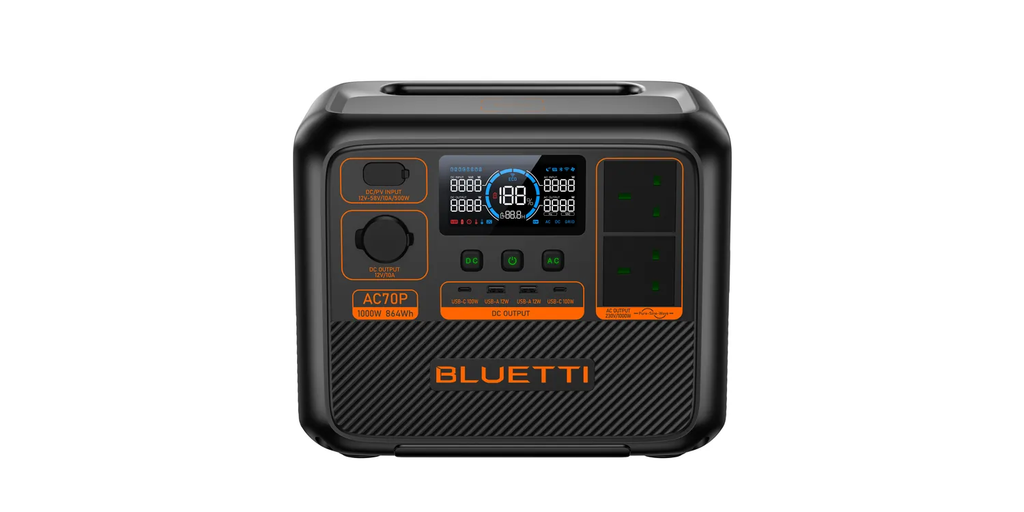
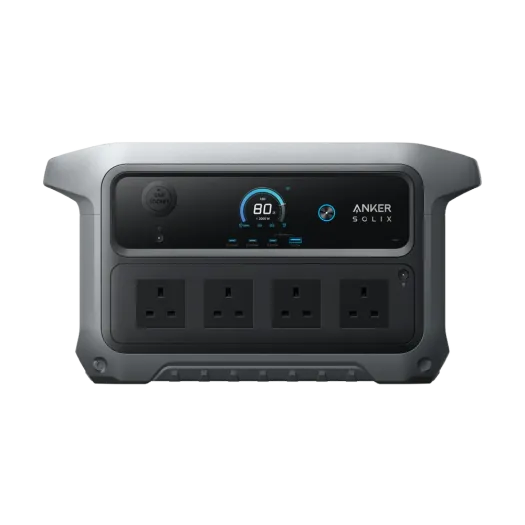
A portable power station can run a fridge, but successful backup depends on matching the complete system rather than relying on a headline wattage. Check the fridge's running demand, allow for compressor start-up, estimate its average daily energy use and decide how long it must remain powered. Then choose an AC output and battery capacity with a sensible margin.
For short outages or efficient compact fridges, a mid-sized power station may be sufficient. A 1,000Wh model provides a practical balance for many domestic refrigerators, while 2,000Wh and expandable systems offer greater resilience for fridge freezers, additional appliances or prolonged interruptions. Campers using a 12V fridge may achieve longer runtime from a smaller DC-compatible unit.
Whichever model you choose, test it with the actual appliance before relying on it. Keep the fridge door closed, monitor internal temperature and recharge the power station whenever electricity or suitable solar input is available. Careful preparation can help keep food cold and essential refrigeration operating until mains power returns.
If you need even more information, explore our Complete Guide To Portable Power Stations. You'll be able to get a closer look at battery capacities, power outputs, charging options and smart features for reliable backup power. Once you know what to look for, browse our Portable Power Stations range to find the right solution for your home, emergency or next adventure with Eco Wizard.
Runtime calculations are estimates and vary according to appliance consumption, compressor cycling, start-up demand, ambient temperature, battery condition, power station settings and conversion losses.
Always check the fridge and power station specifications before use. Follow current Food Standards Agency guidance when deciding whether chilled or frozen food remains safe to eat.