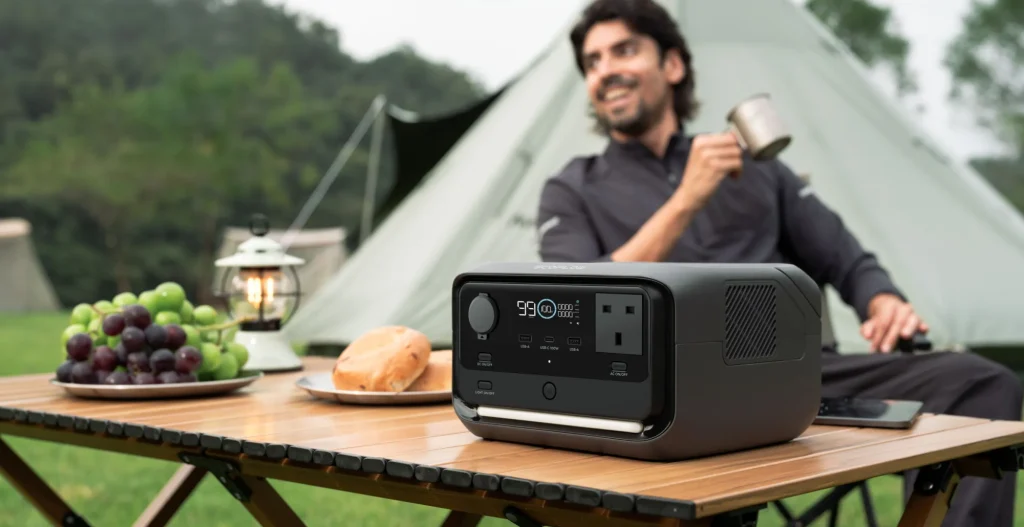
Camping is a welcome opportunity to switch off and disconnect. But having reassuring access to a reliable electricity source can make your trip safer, easier and more comfortable. Phones provide maps and emergency communication, rechargeable lights illuminate tents after dark, cameras capture the journey and portable fridges help keep food fresh. A portable power station brings all these conveniences to a campsite without requiring a fixed electrical hook-up.
Unlike a small power bank, a portable power station can store enough energy to charge several devices and run compatible camping equipment over an extended period. Depending on the model, a portable power station may give you USB-A, USB-C, 12V DC and standard UK AC outputs, all in a single unit. Many can also be recharged from a vehicle or portable solar panel, making them particularly useful for off-grid pitches and longer journeys.
However, the largest and most powerful model is not automatically the best choice for camping…
A high-capacity power station may provide a longer runtime and operate larger appliances, but it will also occupy more space and add more weight to your kit. Hikers, festival campers and families travelling by car will have very different priorities, so the right balance between portability, capacity and output depends on how and where you camp.
Connection type is equally important. Lightweight DC-only power stations are highly efficient for charging phones, tablets, laptops, cameras, drones and 12V equipment, but they cannot power appliances fitted with a standard three-pin plug. Campers who need an AC-powered fridge, projector, air pump or cooking appliance must choose a model with suitable AC sockets and enough continuous output to run it safely.
Useful camping features extend beyond the headline watt-hours. An integrated handle or carry strap makes moving the unit easier, while built-in lighting can reduce the number of separate accessories you need to pack. Quiet operation helps preserve the atmosphere of a peaceful site, and flexible solar, vehicle and mains charging can keep the battery replenished throughout a longer trip.
In this guide, Eco Wizard explains which features matter most, comparing five of the best portable power stations for camping in our product range. For wider explanations of battery capacity, AC output, charging methods and portable power technology, see our Complete Guide To Portable Power Stations.
A portable power station is a central energy supply for devices that would otherwise rely on separate power banks, disposable batteries or a campsite electrical hook-up. One appropriately sized unit can charge several phones, power lighting, replenish cameras and run selected 12V or AC equipment. This is particularly useful for family trips, outdoor photography, festivals, fishing and remote camping where access to mains electricity may be limited.
Battery power also removes the noise and exhaust fumes produced by a petrol generator at the point of use. A portable power station can therefore provide a more campsite-friendly way to operate compatible equipment - although it must still be kept dry, ventilated and within its specified operating temperatures. Solar charging can extend off-grid use when conditions and panel positioning are suitable.
Key reasons to take a portable power station camping:
The required battery capacity depends on the devices you take, their power consumption and the length of the trip. Capacity is measured in watt-hours (Wh). A phone may require only a small fraction of a 288Wh battery for one full charge, while a portable fridge running throughout the day can consume far more. Laptops, heated blankets, electric coolers and cooking equipment can also reduce the available runtime quickly.
For overnight trips, festivals and lightweight travel, a power station in the region of 288Wh to 320Wh can provide a useful reserve for phones, lights, cameras, laptops and other low-power devices. A model closer to 800Wh offers more flexibility for refrigeration, AC appliances and several days away. Actual usable energy will be lower than the advertised capacity because conversion, temperature and the power station's own electronics consume some electricity.
Output must be checked separately from capacity. A large battery tells you how much energy is stored, but the continuous wattage determines which equipment it can operate. Add together the running wattage of devices that will be used simultaneously, check whether motor-driven equipment has a higher starting surge and keep the total within the manufacturer's stated limits.
The best camping power station should suit the way you travel rather than simply offering the highest specification. The EcoFlow TRAIL Plus 300 DC and Anker SOLIX C300X DC minimise weight for device charging. The BLUETTI Premium 30 V2 and EcoFlow RIVER 3 Plus add AC sockets for greater versatility, while the BLUETTI AC70P provides much more stored energy for longer trips and higher-demand equipment.
All five models use long-life LiFePO₄ battery chemistry and support more than one recharging method. Their connections, weight, AC capability, built-in lighting and expandable capacity differ, so these features should be compared against your own camping kit before buying.
Best lightweight portable power station for camping.
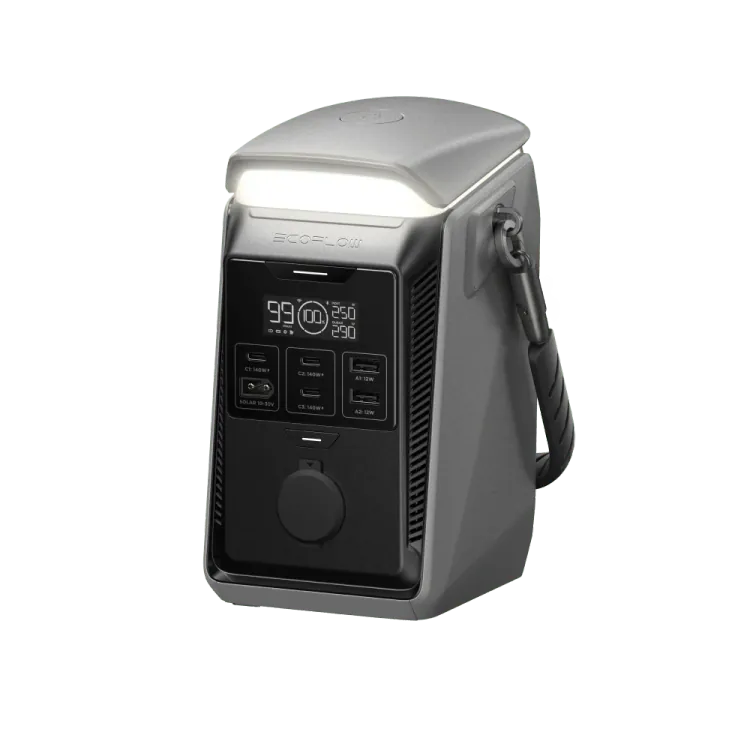
The EcoFlow TRAIL Plus 300 DC has been designed specifically around portable outdoor power. It weighs approximately 2.3kg and stores 288Wh, making it very easy to transport and carry from the car to a pitch. Its detachable handle doubles as a 140W USB-C charging cable, reducing the number of loose accessories that need to be packed.
The TRAIL Plus 300 DC comes with three bidirectional USB-C ports, two USB-A ports, a 12V car outlet and an XT60 solar or vehicle input. Its built-in multifunction camping light is also particularly useful around the tent after dark. The important limitation is that this is a DC-only model with no three-pin AC sockets. It is brilliant for phones, laptops, tablets, cameras, lights and compatible 12V devices rather than conventional plug-in appliances.
Best for USB-C devices and travel technology.
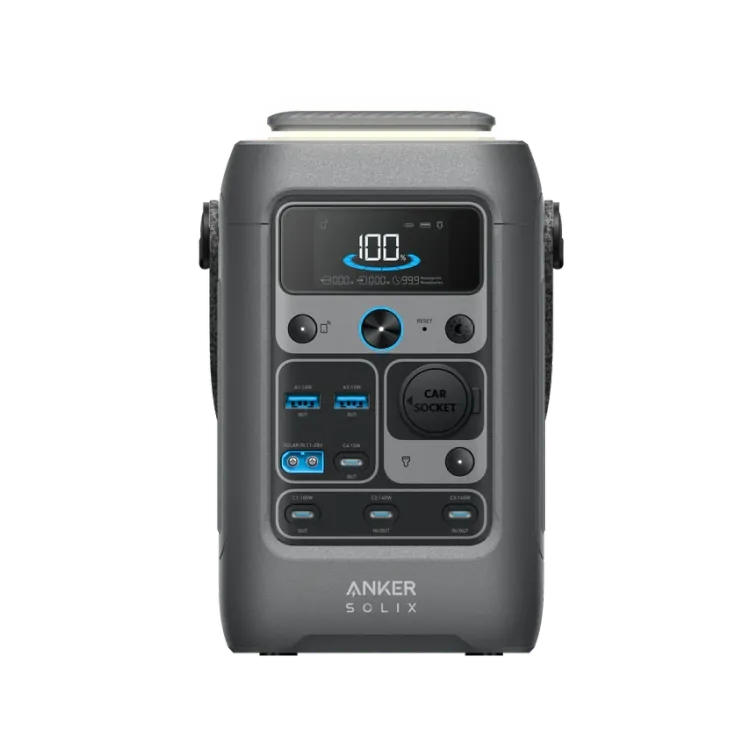
The Anker SOLIX C300X DC is another compact 288Wh power station built for modern mobile equipment. Its seven outputs include four USB-C ports, two USB-A ports and a 12V car socket, with up to 300W of combined DC output. Two USB-C ports can each supply up to 140W, making the unit very well-suited to power-hungry laptops, cameras, drones and fast-charging devices.
An integrated light adds useful illumination around the tent or vehicle area, while an included detachable carry strap improves portability. The C300X DC can be charged through USB-C, from a vehicle or from a compatible solar panel with an input up to 100W. Like the EcoFlow TRAIL model, it has no AC outlet and cannot operate equipment that requires a standard UK three-pin socket. Its strength lies in efficient, flexible DC power rather than household appliance support.
Best compact camping power station with AC output.
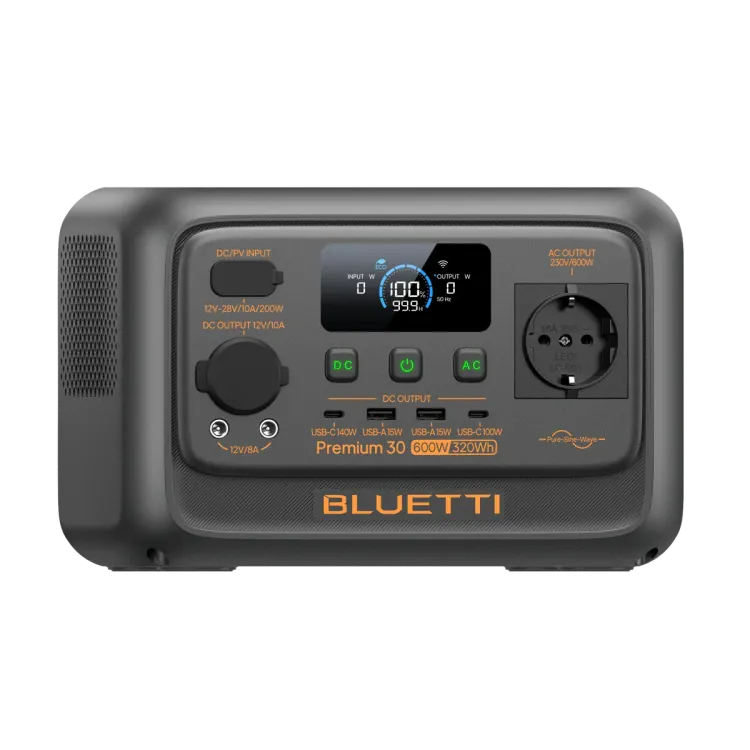
The BLUETTI Premium 30 V2 combines a travel-friendly design with connections for both DC and AC equipment. It weighs approximately 4.3kg and includes a 320Wh LiFePO₄ battery, 600W continuous AC output and a single UK socket. USB-C, USB-A, 12V car and DC5521 outputs allow it to charge several different types of camping equipment.
Its 140W USB-C port is useful for laptops and other high-demand electronics, while the other outputs can charge phones, tablets and cameras, or power camping lights and small fans. The AC socket can also run suitable low-power appliances within its 600W continuous output rating. Fast AC charging can restore 80% capacity in approximately 45 minutes. Power Lifting Mode supports certain compatible resistive appliances above the normal output rating, but it does not increase the standard 600W continuous output. The Premium 30 V2 does not have a built-in camping light, so separate illumination should be included in your kit.
Best expandable portable power station for camping.
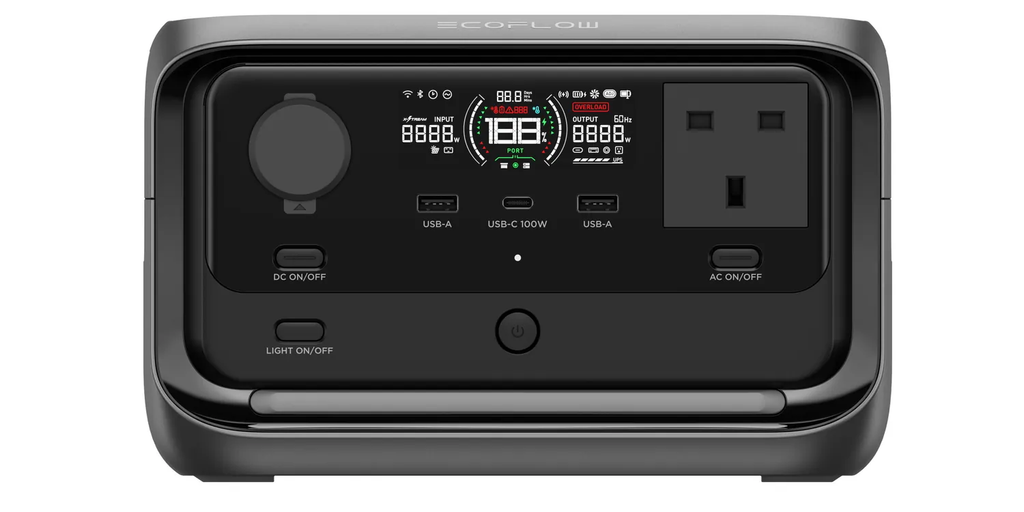
The EcoFlow RIVER 3 Plus provides 286Wh of base capacity, 600W AC output and three UK sockets in a compact 4.7kg unit. It can operate phones, laptops, lighting, cameras and a wider selection of small plug-in appliances than a DC-only power station. EcoFlow's X-Boost mode can run selected compatible appliances with higher stated power requirements, subject to the manufacturer's guidance.
Its major camping advantage is expandability. Compatible EcoFlow EB300 and EB600 batteries can increase total storage to as much as 858Wh, allowing campers to start with a convenient, compact unit and scale up to extend runtimes for longer trips. Mains, solar, vehicle and generator charging provide flexibility, while operation below 30dB at the stated load makes it suitable for quieter campsites.
Best for longer camping and motorhome trips.
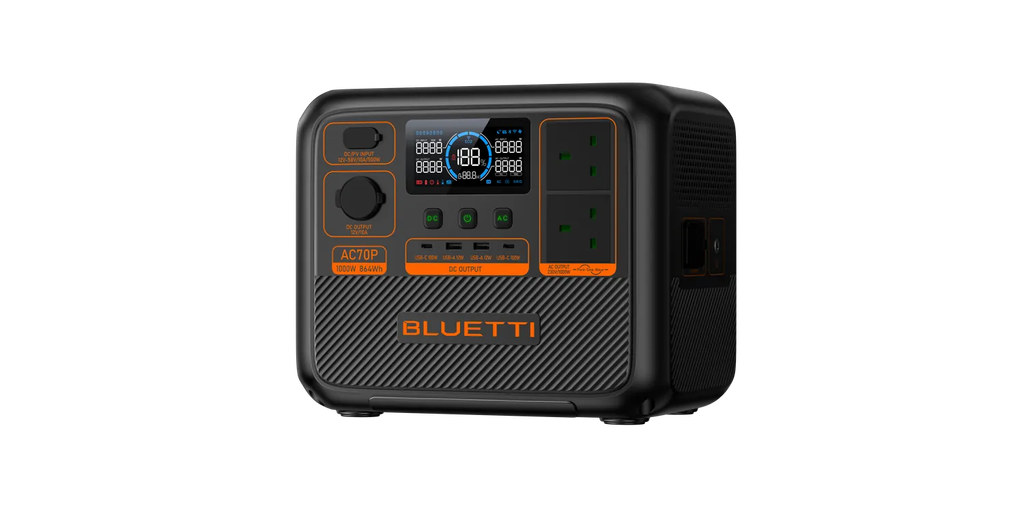
The BLUETTI AC70P is the highest-capacity and most powerful model in our camping power station selection. Its 864Wh LiFePO₄ battery and 1,000W pure sine wave AC output are better-suited to refrigeration, cooking equipment and longer periods away from mains electricity. Eight outputs include two AC sockets, two USB-C ports, two USB-A ports, a 12V car outlet and a wireless charging pad.
At approximately 10.7kg, it is best transported by car, campervan or motorhome rather than carried over long distances. Up to 500W solar input can provide a full recharge in suitable conditions in approximately 2.2 hours, while compatibility with a BLUETTI B80P expansion battery allows additional storage for extended trips. The AC70P does not feature an integrated camping light, so its greater power and runtime need to be weighed against its extra size and the need for separate lighting.
Unsure about how much capacity you really need from your portable power unit? Our Complete Guide To Portable Power Stations will explain exactly how to calculate battery capacity according to your appliance or device type and wattage.
A camping power station needs to be practical in the environment where it will be used. Capacity and output still matter, but weight, connections, noise, lighting and off-grid charging can have just as much influence on day-to-day convenience. The following features provide a more useful basis for comparison than capacity alone.
Every kilogram matters when equipment must be carried from a vehicle to a pitch, and even more so for walking or public-transport trips. A compact unit is easier to fit inside a packed boot, tent or campervan storage compartment. Handles, straps and balanced weight distribution can also make a noticeable difference when moving between locations.
The EcoFlow TRAIL Plus 300 DC is the lightest recommendation at approximately 2.3kg, followed by the BLUETTI Premium 30 V2 at 4.3kg and EcoFlow RIVER 3 Plus at 4.7kg. The Anker C300X DC uses a detachable strap for hands-free carrying. At 10.7kg, the BLUETTI AC70P provides substantially more energy but is better suited to vehicle-based camping.
Choose capacity according to trip length and expected energy use, then make sure the output can run your equipment. Lightweight 288Wh units are practical for rechargeable electronics, but a larger 864Wh model can support higher consumption over a longer period. A power station advertised at 300W cannot continuously run a 600W appliance, regardless of how much battery capacity remains.
Port selection is particularly important. USB-C is ideal for modern phones, tablets, laptops and cameras, while a 12V outlet may suit portable fridges and other vehicle accessories. AC sockets are required for equipment with a UK plug. The EcoFlow TRAIL Plus 300 DC and Anker C300X DC have no AC sockets, whereas the other three shortlisted models provide at least one.
An integrated light can illuminate a tent, help locate equipment after dark or provide backup if a separate lantern runs flat. Both the EcoFlow TRAIL Plus 300 DC and Anker SOLIX C300X DC include built-in lighting. The other recommended models require a separate camping light, although they can recharge compatible USB lanterns.
Noise is equally important on a peaceful or crowded campsite. Battery power stations are much quieter than combustion generators, but internal cooling fans may still operate during heavy use or fast charging. The EcoFlow RIVER 3 Plus is rated below 30dB under specified conditions. Keep any model ventilated and avoid placing it immediately beside where someone is sleeping if the fan is likely to run.
Mains charging is the fastest and most predictable way to prepare before leaving home, but solar and vehicle charging add flexibility during a trip. A compatible panel can replenish energy during daylight, while car charging can recover capacity between locations. Charging speed varies with sunlight, panel size, temperature, vehicle connection and the power station's maximum input.
Check electrical compatibility rather than selecting a solar panel by wattage alone. Voltage, current, connector type and maximum input must all fall within the power station's permitted range. Position solar panels in unobstructed sunlight, secure them against wind and never exceed the manufacturer's input limits. Solar generation is weather-dependent and should not be treated as guaranteed.
LiFePO₄ batteries are a strong choice for repeated camping use because they combine a long cycle life with good thermal stability. All five shortlisted models use this chemistry, with ratings of around 3,000 cycles or more on several models. A battery may continue working after its stated cycle point, but with less usable capacity than when new.
Durable construction does not necessarily mean weatherproof construction. For example, the EcoFlow TRAIL Plus 300 DC has an IP30 rating, which does not protect it against rain or water ingress. Keep any portable power station dry, off wet ground and away from condensation. Use it within the specified temperature range, maintain ventilation and store it securely while travelling.
A DC-only power station is often the most efficient and portable choice when your equipment charges through USB or uses a 12V connection. Eliminating the AC inverter can reduce size, weight and conversion losses. The EcoFlow TRAIL Plus 300 DC and Anker C300X DC are therefore excellent choices for phones, laptops, cameras, drones, lights and selected portable fridges, provided every device has a compatible connection.
Choose an AC model if you need to use equipment fitted with a standard UK plug. The BLUETTI Premium 30 V2 and EcoFlow RIVER 3 Plus provide 600W AC output for modest appliances, while the BLUETTI AC70P increases continuous output to 1,000W. Check running and starting power carefully, particularly for fridges, air pumps and equipment containing motors or compressors.
Do not rely on an adaptor to make an unsuitable device compatible. A USB or 12V adaptor does not give a DC-only power station the ability to run a mains appliance, and an AC model still cannot exceed its continuous or surge limits. Decide which equipment is essential before choosing the power station and bring the correct manufacturer-approved cables.
For lightweight camping centred on phones, cameras and laptops, the EcoFlow TRAIL Plus 300 DC is the strongest all-round choice. Its low weight, integrated USB-C cable handle and built-in camping light have clear value outdoors. The Anker SOLIX C300X DC is an excellent alternative for campers with several USB-C devices who value high-power ports and a handy carry strap.
Campers who need standard plug sockets should consider the BLUETTI Premium 30 V2 for compact AC power or the EcoFlow RIVER 3 Plus for expandable capacity and three AC outlets. The BLUETTI AC70P is the best option for longer vehicle-based trips, refrigeration and higher energy demands, providing its additional weight is acceptable.
Before leaving, fully charge your power station of choice, test every intended device and confirm that all cables and adaptors are packed. Keep the unit dry, shaded from excessive heat and adequately ventilated. A carefully matched power station can then provide dependable, often whisper-quiet energy, without taking away from the simplicity of being outdoors.
Portable power station runtime and charging performance vary according to load, settings, temperature, battery condition, solar conditions and conversion losses. Product water-resistance and operating limits differ. Always follow the manufacturer's instructions, keep the unit protected from rain and check that every connected appliance is within the specified output limits.
If you're looking beyond the campsite, our Complete Guide To Portable Power Stations unpacks even more of the functions and features connected to emergency backup power. Once you've made an informed decision, visit our Portable Power Station collection to complete your journey with Eco Wizard today.