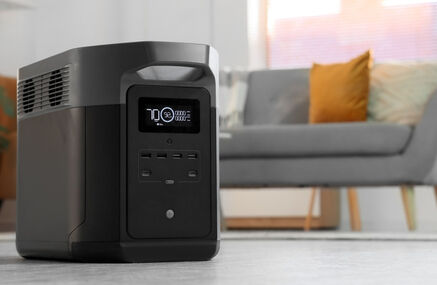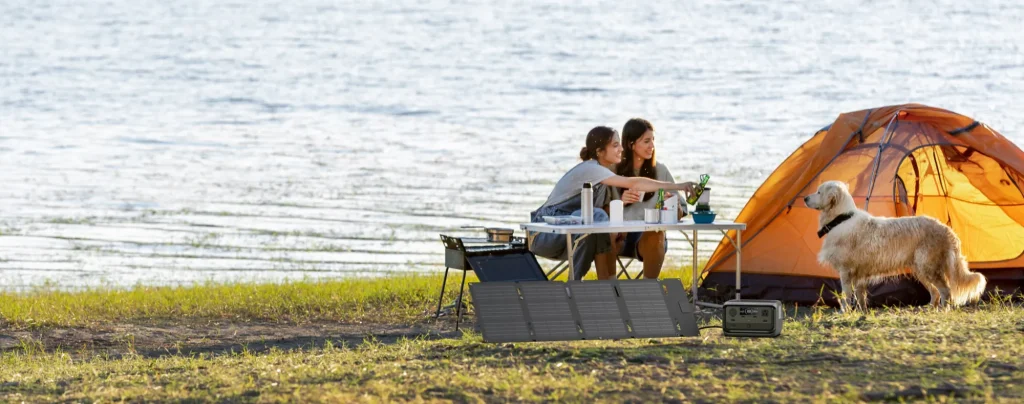
Portable power stations are a convenient way to access electricity when you're away from mains power, but keeping their internal batteries charged can be challenging during extended camping trips, motorhome adventures or prolonged power cuts. Solar panels offer a practical solution, allowing you to replenish stored energy using sunlight without relying entirely on plug sockets, vehicle charging or fuel-powered generators.
Most modern portable power stations support solar charging, making it possible to generate electricity during daylight hours and store it for use whenever you need it. When paired with compatible portable solar panels, these systems can power phones, laptops, lighting, camping equipment and selected household appliances, delivering greater flexibility for outdoor activities and emergency backup.
However, solar charging performance depends on more than simply connecting a panel to your power station. Solar input limits, panel wattage, voltage compatibility, weather conditions and battery capacity all affect how quickly your unit will recharge. A 200W solar panel may be sufficient for a compact power station, while larger 1kWh or 2kWh models can benefit from higher-output solar arrangements.
Choosing the right equipment is equally important. Not every solar panel will work with every portable power station, and the maximum advertised panel wattage does not represent the electricity you can expect to generate throughout the day. Understanding these differences helps you avoid incompatible equipment, unnecessarily slow charging and unrealistic expectations about solar performance.
Fortunately, solar charging is relatively straightforward once you understand the basic requirements. Many portable power stations include built-in solar charge controllers, while compatible folding panels and manufacturer-approved charging cables simplify the process. With the right combination, you can create a flexible portable energy system for camping, off-grid activities and home backup.
In this guide, Eco Wizard explains how to charge a portable power station with solar panels, how long solar charging takes and which specs matter when choosing compatible equipment. We'll also explore the advantages, limitations and practical considerations to help you make the most of solar-powered portable electricity. For more in-depth advice on capacities, outputs and charging methods, see our Complete Guide To Portable Power Stations.
Yes, most modern portable power stations can be charged using compatible solar panels. These systems convert sunlight into electricity and transfer it to the power station's rechargeable battery, allowing you to store energy for use during the day or after sunset.
Unlike a conventional mains charger, solar panels generate electricity according to available sunlight. Charging performance therefore changes throughout the day, with stronger output generally available during clear, bright conditions and reduced generation during cloudy weather or in areas of shade.
Portable power stations designed for solar charging usually contain an integrated maximum power point tracking (MPPT) charge controller. This manages the electricity received from compatible solar panels and helps optimise charging performance as sunlight conditions change.
The main requirements for solar charging include:
When these requirements are met, solar charging provides a convenient way to replenish stored electricity without needing access to the mains grid.
Solar charging begins when photovoltaic cells inside a solar panel absorb sunlight and generate direct current (DC) electricity. This electricity travels through a compatible charging cable to the portable power station's solar input. The integrated charge controller regulates the incoming electricity and manages battery charging. Once stored, the energy can be supplied through the power station's AC, USB or DC outputs, depending on the connected appliance or device.
The process generally involves four stages:
Many portable power stations also support simultaneous charging and discharging, allowing connected devices to operate while solar panels replenish the battery. However, actual battery charge will only increase when incoming solar energy exceeds the power being consumed and associated conversion losses. This makes solar charging particularly useful for camping, motorhomes, outdoor work and longer periods away from conventional electricity supplies.
Portable power stations can work with several types of solar panels, provided their electrical specifications and connections are compatible. The most suitable option depends on how frequently you travel, the available installation space and the amount of electricity you need to generate.
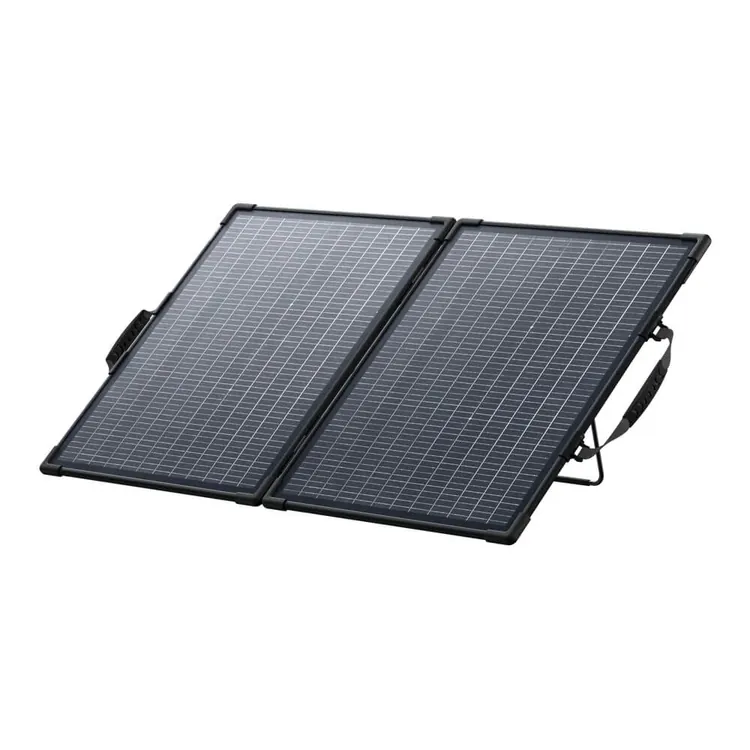
Folding portable solar panels are among the most convenient options for camping, festivals, motorhomes and temporary off-grid use. Typically constructed using monocrystalline solar cells enclosed in lightweight, foldable sections, they combine efficient electricity generation with a compact design that's easy to transport and store. Many models feature integrated kickstands, carry handles and weather-resistant materials, allowing you to position them outdoors and adjust their angle to capture more sunlight.
Available in configurations ranging from compact 60W models to larger 100W, 200W, 400W and higher-output panels, folding designs offer flexibility for different battery capacities and charging requirements. Smaller panels are particularly useful for replenishing compact power stations and charging everyday electronics, while higher-wattage models can provide faster recharging for compatible 1kWh and 2kWh systems. Their main advantage is portability, making them an excellent choice for users who want convenient solar charging without permanent installation.
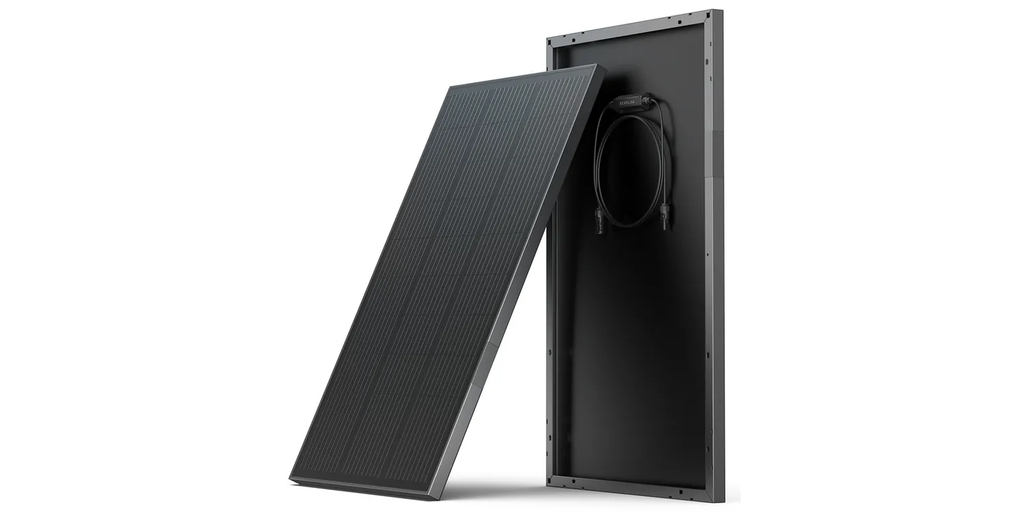
Rigid solar panels are primarily for permanent or semi-permanent installations, making them particularly suitable for off-grid cabins, garden buildings, motorhomes and fixed outdoor charging systems. They typically feature monocrystalline photovoltaic cells protected by tempered glass and a supporting frame, providing a durable construction designed to withstand prolonged outdoor exposure. Many models include pre-drilled mounting points or compatible mounting systems for secure installation on suitable surfaces.
Unlike folding panels, rigid solar panels are generally intended to remain in a fixed position rather than being regularly transported and repositioned. They are available in a wide range of power ratings, from compact 100W modules to larger 400W–500W panels commonly used in fixed solar installations. Their robust construction and suitability for long-term mounting make them a practical option for regularly charging compatible portable power stations, although panel voltage, current and connector requirements must be checked carefully before connection.
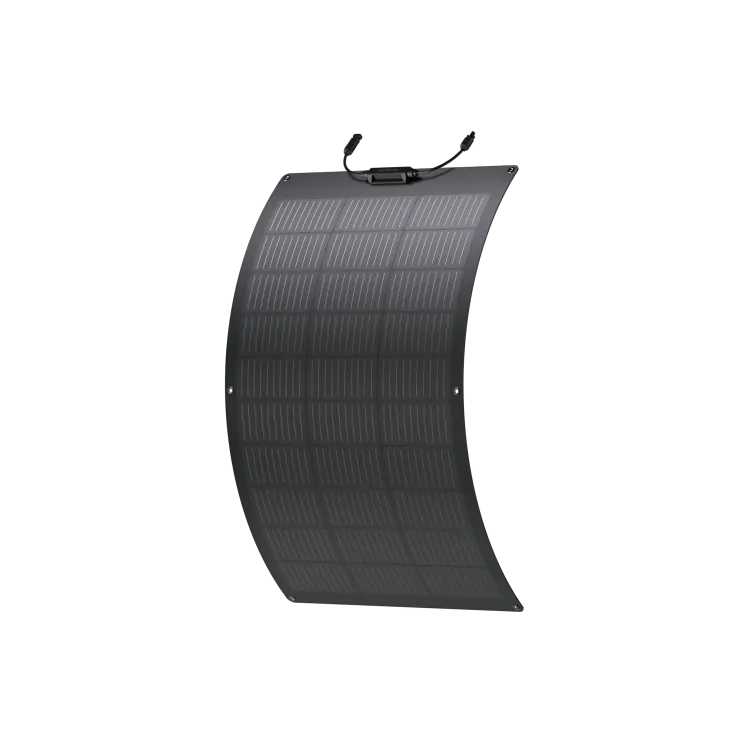
Flexible solar panels offer a lightweight alternative to conventional rigid panels, making them particularly useful for campervans, motorhomes, boats and installations where weight or available mounting space is limited. They typically use thin monocrystalline solar cells supported by flexible backing materials and protective polymer coatings, allowing them to conform to gently curved surfaces within the manufacturer's specified bending limits. Their low-profile construction can also make them easier to integrate into selected vehicle and mobile solar installations.
Commonly available in compact 100W and similar configurations, flexible panels can provide practical charging for smaller portable power stations or form part of a larger compatible solar arrangement. Their reduced weight and minimal thickness are particularly beneficial where conventional framed panels would be difficult to accommodate. However, suitable mounting, ventilation and temperature management are important considerations, as excessive heat, repeated flexing or incorrect installation can affect long-term performance. Always follow the manufacturer's mounting and electrical compatibility requirements.
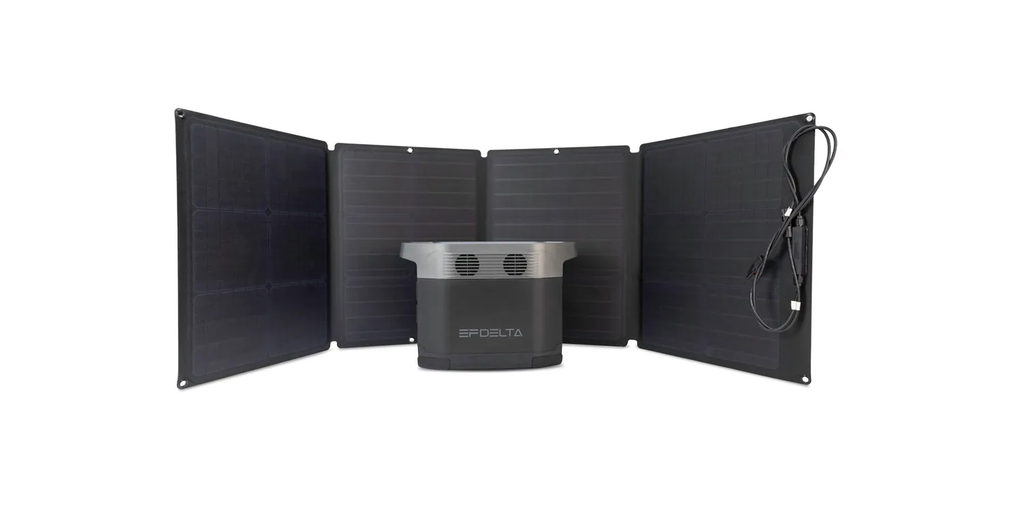
Leading portable power manufacturers such as EcoFlow, BLUETTI and Anker offer dedicated portable solar panels to complement their respective power stations. These ranges include compact folding panels for lightweight travel, higher-output portable models for extended off-grid use and selected rigid or flexible options for more permanent arrangements.
Many incorporate monocrystalline solar cells, weather-resistant construction and practical features such as adjustable kickstands, integrated carrying cases and compatible charging connections.
Choosing panels from the same manufacturer as your portable power station can simplify compatibility checks, particularly where recommended panel combinations, charging cables and maximum input configurations are clearly documented. For example, EcoFlow offers portable panels across several wattage classes, while BLUETTI and Anker provide options designed for different battery capacities and charging requirements. Third-party panels can also work effectively, provided their open-circuit voltage, operating current, connector polarity and combined electrical ratings remain within the power station's supported limits. Manufacturer branding alone does not guarantee compatibility with every model.
The number of solar panels required depends on the power station's battery capacity, maximum solar input and the output rating of each panel. A larger battery generally requires more solar energy to recharge within a given period, but the station's input limit determines how much charging power it can accept.
For example, a portable power station supporting 500W solar input may be paired with a compatible 200W panel for convenient everyday charging. Adding more suitable panels can increase potential generation, provided the combined electrical specifications remain within the manufacturer's permitted limits.
A power station supporting 1,000W solar input offers greater flexibility for larger solar arrangements, potentially reducing charging times during suitable weather conditions.
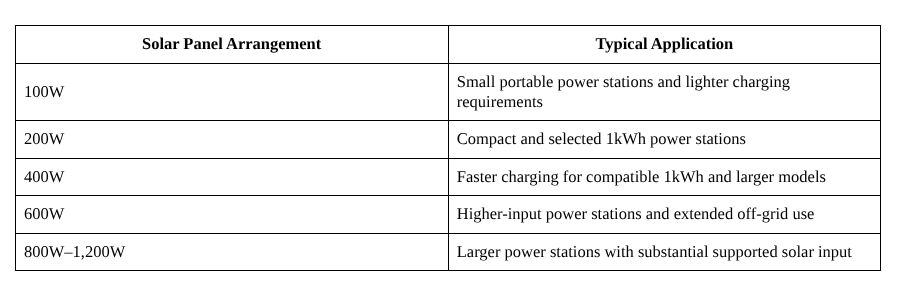
These are general sizing examples rather than guaranteed compatible combinations. Panel wattage alone does not determine suitability, and some arrangements require series or parallel connections that must be approved for the specific power station.
Important: The most important consideration is matching your solar panel arrangement to the power station's electrical input specifications rather than simply choosing the highest available wattage.
Solar charging time depends on battery capacity, actual solar generation, charge controller efficiency and whether the power station is supplying electricity to connected devices. Larger batteries require more energy, while higher solar input can reduce charging times when sufficient sunlight is available.
A simple starting point is to divide the battery capacity in watt-hours by the average solar charging power in watts. This provides an idealised estimate before accounting for conversion losses, variable sunlight and charging behaviour as the battery approaches full capacity.
For example, a 1,024Wh portable power station receiving a steady 200W of charging power would require approximately 5.1 hours under ideal conditions. In practice, charging would take longer because panel output changes throughout the day and some energy is lost during conversion.
The following examples assume the stated average charging power is maintained continuously. They are simplified calculations, not manufacturer charging-time guarantees.
Battery capacity Average solar input Ideal charging time 256Wh 100W 2.6 hours 512Wh 200W 2.6 hours 1,024Wh 200W 5.1 hours 1,024Wh 400W 2.6 hours 2,048Wh 400W 5.1 hours 2,048Wh 800W 2.6 hours
Actual charging times will usually be longer, particularly during cloudy weather, winter or periods when panels receive indirect sunlight. The table also assumes charging from empty and does not account for simultaneous appliance use.
For longer off-grid stays, it is often more useful to estimate how much electricity your panels can generate each day rather than relying on a single full-recharge figure.
Even with compatible equipment, solar charging performance can vary considerably. Understanding the factors that influence generation helps you position panels effectively and estimate how much stored energy you can realistically replenish.
Key factors include:
Solar charging is therefore most effective when panel capacity, sunlight conditions and daily electricity requirements are all considered together.
Yes, solar charging works in the UK and can provide a useful source of electricity for portable power stations throughout the year. Solar panels generate electricity from daylight rather than requiring consistently hot weather, although the amount produced varies considerably with seasonal conditions.
During spring and summer, longer daylight hours and stronger sunlight can make solar charging particularly practical for camping, motorhomes and outdoor activities. Portable panels positioned in an open, unshaded area may generate enough electricity to replenish a meaningful proportion of a compatible power station's capacity.
Autumn and winter conditions are more challenging. Shorter days, lower sun angles, frequent cloud cover and changing weather can reduce daily generation significantly. A solar arrangement that performs well during summer may provide much less energy during December or January.
For customers in the UK, solar charging is best considered a flexible additional charging method rather than a guaranteed replacement for mains electricity. Combining solar input with mains, vehicle or alternator charging can provide greater reliability when sunlight is limited.
Charging a portable power station with solar panels is generally straightforward when using compatible equipment. However, checking electrical specifications and following the manufacturer's connection instructions is essential to protect the charging system.
Identify your power station's supported solar voltage range, maximum input current and maximum solar charging power. These specifications determine which panels and connection arrangements can be used safely.
Select panels that meet the power station's requirements. Check the panel's open-circuit voltage (Voc), operating voltage, current ratings and connector type rather than relying on advertised wattage alone.
Place portable panels outdoors in a stable, open location with good sunlight exposure. Avoid shading and follow manufacturer guidance on positioning, weather resistance and safe use.
Connect the solar panels using the appropriate manufacturer-approved cable or compatible adapter. Follow the recommended connection sequence and never use an unsuitable adapter simply because the connectors appear similar.
Check the power station's display or connected app, where available, to confirm that solar charging has started. Many models show incoming wattage, battery percentage and estimated remaining charging time.
Reposition portable panels as sunlight conditions change to maintain effective generation. For longer charging sessions, periodically check that panels remain secure, unshaded and correctly connected.
Always follow the manufacturer's instructions when connecting multiple panels. Series connections increase voltage, while parallel connections increase current, and exceeding supported electrical limits can damage equipment.
Not all portable power stations offer the same solar charging capability. Some prioritise compact portability and modest solar input, while others support substantially higher charging power for longer off-grid stays and larger battery capacities.
The following models from Eco Wizard's portable power range illustrate how solar charging specifications can differ.
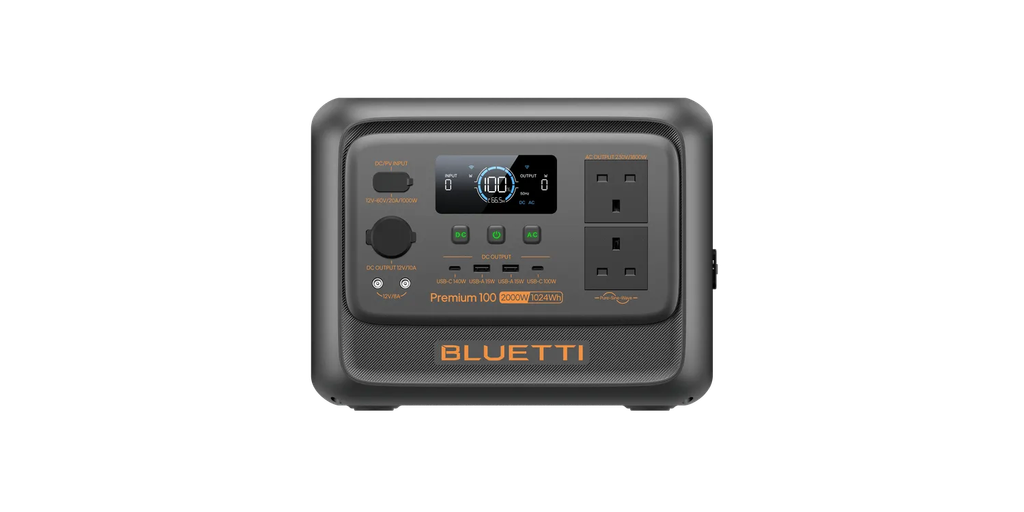
The BLUETTI Premium 100 V2 combines a 1,024Wh LiFePO₄ battery with up to 1,000W solar input, making it a strong option for customers who prioritise rapid off-grid recharging. Its 1,800W continuous AC output also provides sufficient power for a wide range of compatible household appliances and camping equipment.
Its relatively compact 1kWh design is well suited to camping, motorhomes and home backup, particularly where a suitable high-output solar arrangement is available. The fixed battery capacity is less flexible than expandable alternatives, but its substantial solar input is a major advantage.
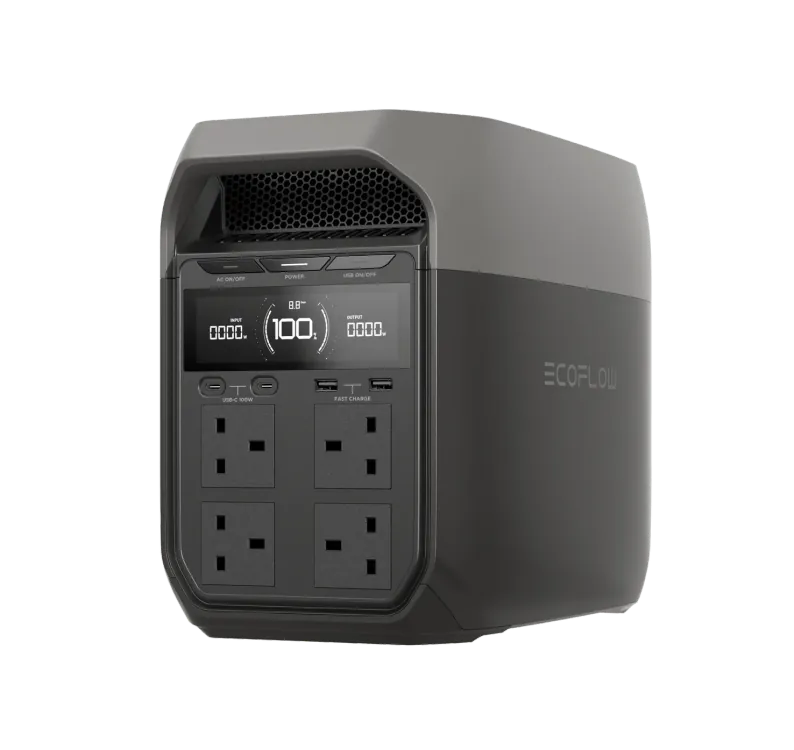
The EcoFlow DELTA 3 offers a balanced combination of 1,024Wh battery capacity, 1,800W continuous output and up to 500W solar charging. This makes it a practical choice for users who want flexible solar charging without moving to a substantially larger power station.
Compatible battery expansion also provides additional storage for longer off-grid use. Alongside solar charging, the DELTA 3 supports mains, vehicle, generator and combined charging methods, offering useful flexibility when sunlight is limited.
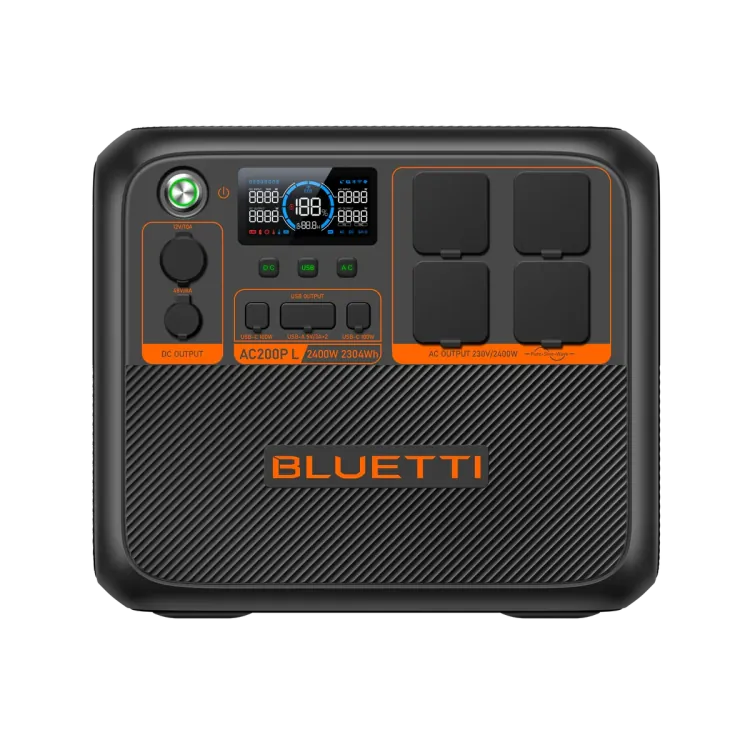
The BLUETTI AC200PL is particularly suitable for customers who need substantial battery storage and higher solar charging capability. Its 2,304Wh base battery supports up to 1,200W solar input, while compatible expansion batteries can increase total storage capacity to 8,448Wh.
This combination makes it well suited to extended off-grid stays, motorhomes, cabins and larger backup arrangements. Its approximately 28.8kg weight makes it less convenient for frequent carrying, but the additional capacity and solar input provide greater flexibility for stationary or vehicle-based use.
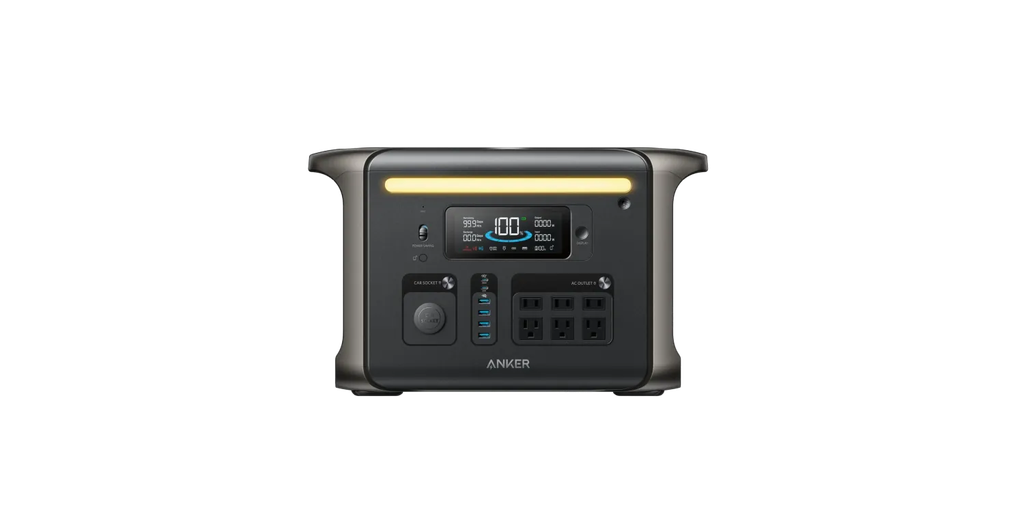
The Anker SOLIX F1500 combines a substantial 1,536Wh battery capacity with 1,800W continuous AC output, providing a practical solution for extended camping trips, motorhome travel and household backup. Its larger battery offers additional runtime compared with typical 1kWh models, making it suitable for users who need to operate multiple devices or appliances for longer periods.
Solar charging support allows compatible panels to replenish stored energy during off-grid use, while mains and vehicle charging provide alternatives when sunlight is limited. Its combination of battery capacity and inverter power makes it a strong option for customers who prioritise longer runtime without moving to a much larger 2kWh-class system.
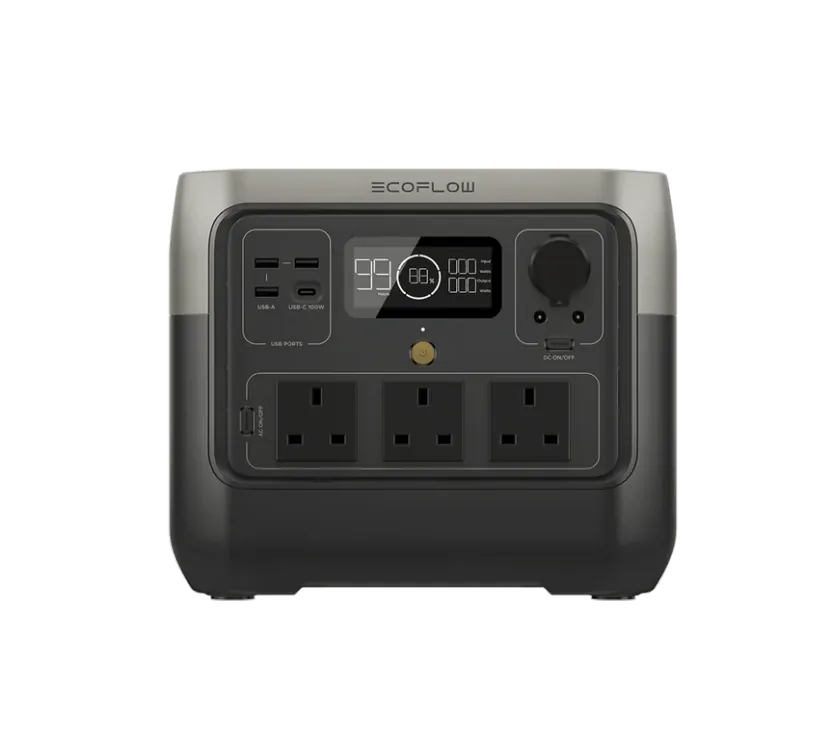
The EcoFlow RIVER 2 Pro combines a 768Wh LiFePO₄ battery with 800W continuous AC output and up to 220W solar input, providing a practical balance of portability, battery storage and off-grid charging capability. Weighing approximately 7.8kg, it is particularly suitable for camping, motorhomes, outdoor activities and customers who need more runtime than a compact 300Wh power station can provide.
Its integrated MPPT controller manages electricity received from compatible solar panels, while mains and vehicle charging offer alternative ways to replenish the battery. Four charging methods, multiple AC and USB connections and EcoFlow app control provide additional flexibility for everyday use. Its battery is also rated for more than 3,000 charging cycles, supporting long-term reliability.
Solar charging can be a worthwhile addition to a portable power station, particularly for customers who regularly spend time away from mains electricity. It provides an alternative way to replenish stored energy and can reduce dependence on vehicle charging or fuel-powered generators during suitable daylight conditions.
The main advantages include:
However, solar charging also has limitations. Generation is weather-dependent, panels require suitable outdoor space and larger arrangements can be expensive or inconvenient to transport. Solar input limits may also prevent smaller power stations from taking full advantage of higher-output panels.
For occasional indoor backup, mains charging may remain the most practical option. Solar becomes more valuable when regular outdoor use, extended trips or limited access to conventional charging makes additional energy generation worthwhile.
Choosing a portable power station for solar charging requires careful consideration of battery capacity, solar input specifications and everyday power requirements. A model with a large battery is not necessarily the best solar charging option if its input capacity is relatively limited.
Important features include:
Prioritise the specifications that match your intended use rather than assuming that the highest solar input or largest battery automatically provides the best overall solution.
For a more detailed look at the features that matter most in a portable power station, explore our Complete Guide To Portable Power Stations. Discover how pure sine wave AC output, high-power USB-C connections, versatile DC outputs, information displays and smart app controls improve compatibility, convenience and everyday usability.
No. The power station must support solar charging, and the connected panels must meet its voltage, current and connection requirements. Some smaller battery packs do not include a suitable solar input. Always check the manufacturer's specifications before purchasing panels.
Many power stations can use compatible third-party solar panels, but compatibility must be verified. The panel's voltage, current, polarity and connector arrangement must meet the power station's requirements. Manufacturer-branded panels may simplify selection but are not always essential.
Yes, many models support simultaneous charging and discharging. However, the battery will only gain charge when incoming solar energy exceeds the power being consumed and associated losses. Check the manufacturer's guidance for any operating restrictions.
Yes, provided the panel is electrically compatible and supplies sufficient charging voltage. A 100W panel would require at least ten hours at a constant 100W to supply 1,000Wh before losses. Real-world charging generally takes considerably longer and may require multiple days of sunlight.
Yes, solar panels can generate electricity in cloudy conditions, although output is usually significantly lower than under strong direct sunlight. Charging may continue at a reduced rate, but performance depends on cloud cover, panel positioning and available daylight.
Some systems allow panels to remain connected when sunlight is unavailable, but suitability depends on the manufacturer's instructions. Solar generation will stop after dark, and panels should be positioned and secured appropriately for overnight weather conditions.
Yes, where the manufacturer supports multiple-panel arrangements. Series connections increase voltage, while parallel connections increase current. The combined configuration must remain within the power station's specified limits, including maximum open-circuit voltage under expected temperatures.
Most modern solar-compatible portable power stations include an integrated charge controller, so a separate controller is generally unnecessary when connecting suitable panels directly. Always follow the manufacturer's instructions, particularly when using existing solar installations or external charging equipment.
Yes, depending on battery capacity, panel output, available daylight and weather conditions. Smaller power stations can be easier to recharge within a day, while larger batteries may require higher-output panels or several days of generation.
Yes. A compatible portable power station can recharge from solar panels during a mains outage, provided sufficient daylight is available. This can extend the usefulness of stored backup energy, although generation is not guaranteed and should not be relied upon as the sole supply for critical equipment.
Charging a portable power station with solar panels is a practical way to extend access to electricity during camping, motorhome travel, outdoor activities and unexpected power cuts. With compatible equipment, sunlight can replenish stored battery energy and reduce reliance on mains electricity when you're away from the grid.
The most important consideration is compatibility. Solar panel wattage, voltage, current and connectors must match the power station's supported input specifications. Battery capacity and maximum solar charging power also determine how quickly stored energy can be replenished, while weather, season and panel positioning influence actual performance.
For compact charging requirements, smaller portable power stations paired with suitable folding panels can provide convenient electricity for phones, laptops, lighting and camping equipment. Larger 1kWh and 2kWh models offer greater storage and appliance support, particularly when combined with higher-output solar arrangements.
If you're considering solar charging for your next camping trip, motorhome adventure or home backup system, explore Eco Wizard's range of Portable Power Stations and Solar Panels. For even more information and advice, read our Complete Guide To Portable Power Stations and find a solution that suits your energy requirements.
Solar charging performance varies with sunlight, temperature, panel positioning, equipment compatibility and battery condition. Always check the power station's supported solar input specifications and the solar panel manufacturer's electrical ratings before connecting equipment.