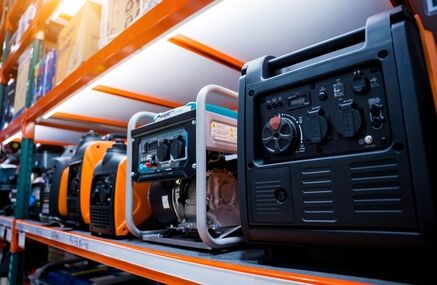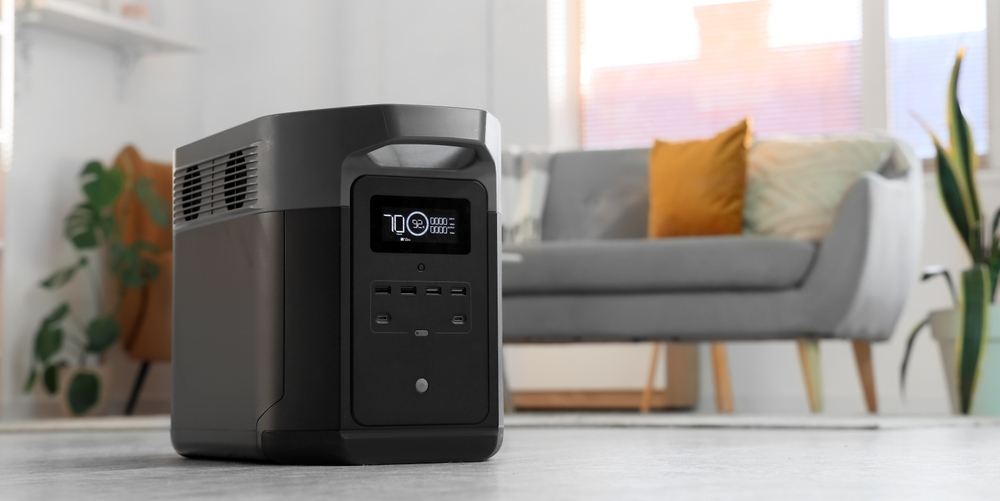
Portable power stations have become one of the most practical ways to access electricity away from the grid or maintain essential equipment during a power cut. Modern units can keep phones, laptops, routers and lighting charged, while larger models can run refrigerators, televisions, pumps, power tools and selected cooking appliances. Unlike fuel generators, they produce no exhaust fumes at the point of use and operate with far less noise.
The best models available in the UK are also faster, safer and more adaptable than earlier generations. Long-life LiFePO₄ batteries are now widely available, recharge times have fallen significantly and high-output inverters can support demanding appliances from relatively compact units. Solar, vehicle and alternator charging also give you additional flexibility for camping, motorhomes and off-grid work.
However, the highest capacity or strongest output does not automatically make one portable power station the best for every buyer. A 2kWh model may be ideal for extended home backup but unnecessarily heavy for a weekend trip. A compact unit is easier to carry, but its smaller battery and inverter will limit which appliances it can run and for how long.
Value also means more than finding the lowest price. Battery cycle life, usable output, charging speed, port selection, expansion support and warranty all affect long-term ownership. A cheaper unit can be excellent for occasional use, while paying more for expandable capacity may help you to avoid replacing the entire system if your power requirements increase.
We have therefore selected seven leading models for different requirements rather than forcing every product into a single ranking. The EcoFlow DELTA 3 offers the best overall balance, while the remaining recommendations cover value, extended backup, high-output 1kWh power, expansion, compact portability and budget-conscious buying.
In this guide, Eco Wizard explains why each model earns its category and what trade-offs to consider before buying. For more detailed help with capacities, outputs and charging methods, see our Complete Guide To Portable Power Stations.
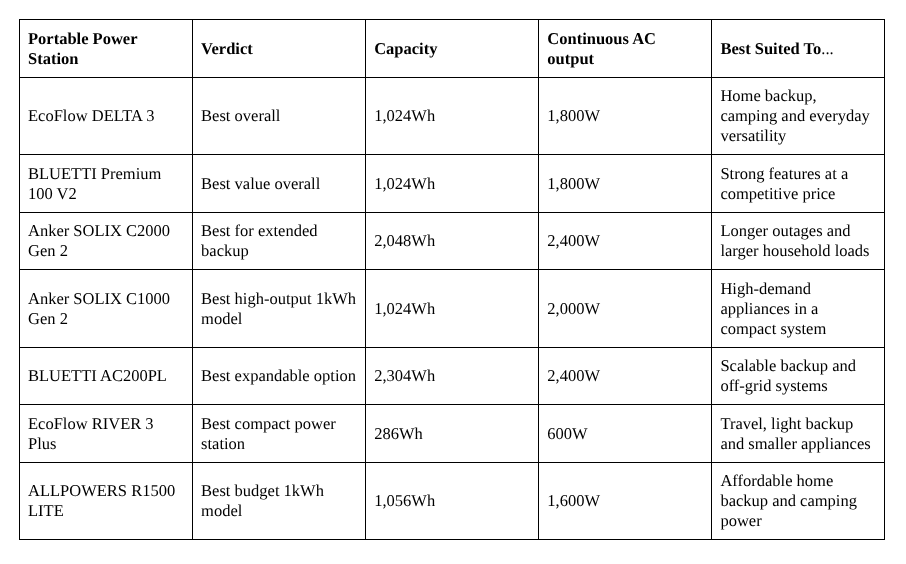
Specifications refer to the base units and manufacturer-stated ratings. Expansion batteries and charging accessories are generally sold separately.
The strongest portable power stations combine dependable battery storage with an inverter capable of running useful equipment. Battery capacity determines how much energy is stored, while continuous output determines the combined load that can operate. Surge capability is also important for appliances with compressors, pumps or motors that briefly draw more power when starting.
We also considered charging speed, battery chemistry, cycle life, UPS functionality, noise, port selection, weight and expansion support. These qualities affect how practical a unit is in daily use and how well it adapts to future requirements. Product pricing can change, so value awards are based on the overall capability offered within each class rather than a temporary discount alone.
Key qualities considered include:
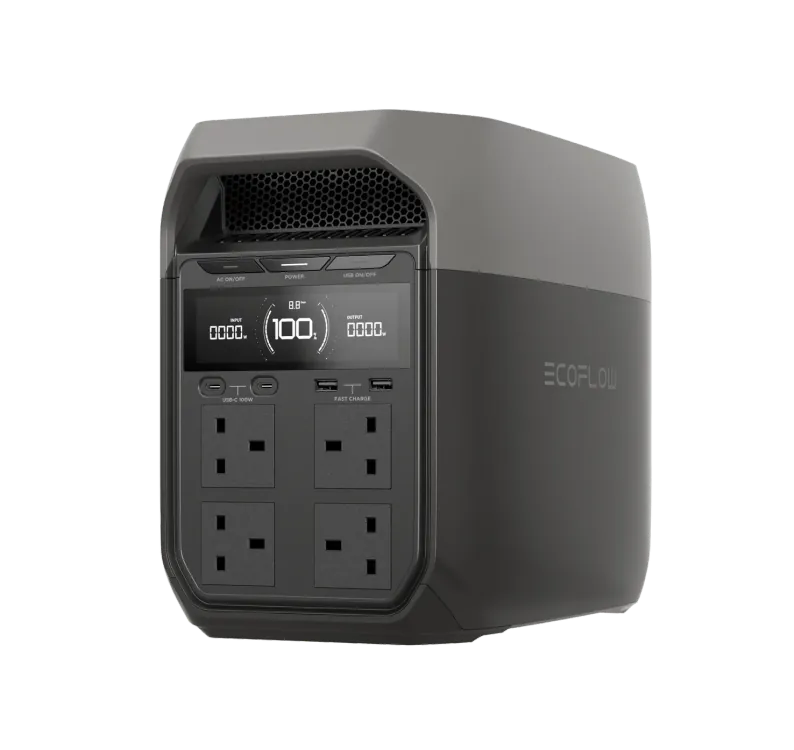
The EcoFlow DELTA 3 earns our best overall recommendation because it balances capacity, power, charging flexibility, portability and expansion particularly well. Its 1,024Wh LiFePO₄ battery is large enough for meaningful home backup and off-grid use without making the unit excessively difficult to carry. A 1,800W continuous output and 3,600W surge rating allow it to operate a broad selection of household appliances and electronics.
Four UK AC outlets, USB connections and DC outputs provide enough flexibility for several devices at once. It also supports mains, solar, vehicle, generator and combined charging methods. Maximum 500W solar input is useful for camping and longer off-grid stays, while compatible alternator charging can replenish the battery more quickly during vehicle-based travel.
The DELTA 3 is rated for 4,000 cycles before retaining 80% of its original capacity and can expand beyond its standard 1,024Wh battery with compatible EcoFlow extra batteries. A transfer time below 10ms provides UPS support for suitable devices, while noise can remain below 30dB at loads under 600W. At approximately 12.5kg, it offers an unusually complete combination of output, runtime and mobility.
Why We Chose It:
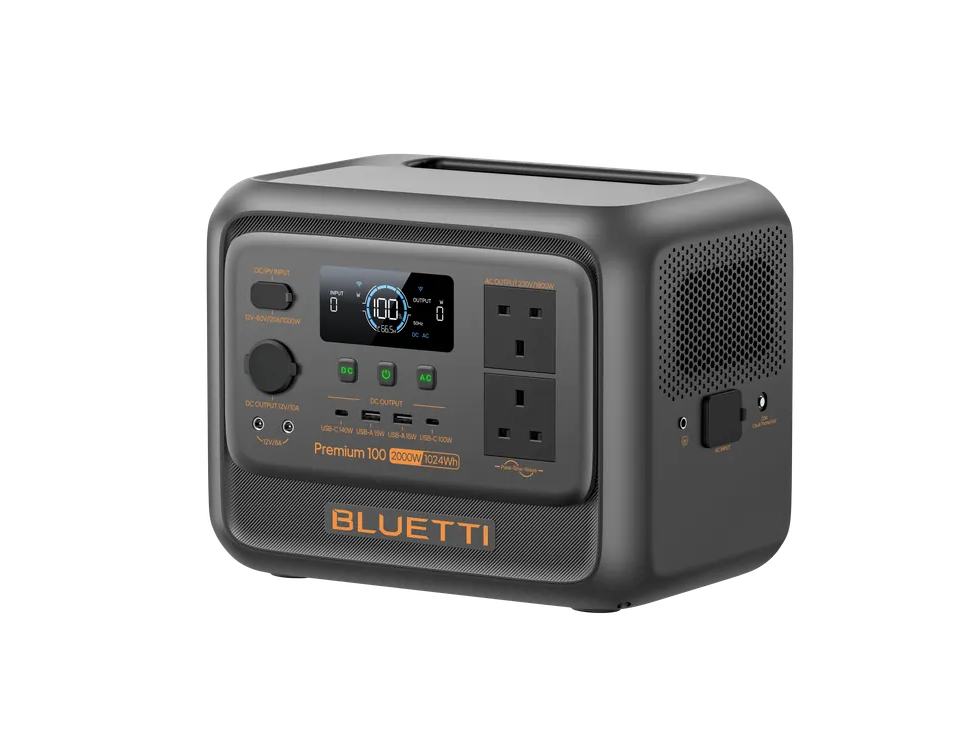
The BLUETTI Premium 100 V2 delivers one of the strongest combinations of battery capacity, output and charging performance in the 1kWh class. Its 1,024Wh LiFePO₄ battery and 1,800W continuous AC output match substantially more expensive models, while a 3,600W surge rating helps start compatible equipment with higher initial demand.
Nine outputs include two UK AC sockets, two USB-A connections, 100W and 140W USB-C ports, two DC5521 outputs and a 12V car outlet. This provides flexible support for household appliances, mobile technology, cameras and camping equipment. TurboBoost charging can restore 80% capacity in approximately 45 minutes, while up to 1,000W solar input enables rapid off-grid recharging in suitable conditions.
The long-life battery is rated for up to 4,000 cycles, and a 10ms UPS mode helps maintain compatible equipment when mains electricity fails. At approximately 11.5kg, it is also one of the lighter full-featured 1kWh options. Its capacity is fixed rather than expandable, but buyers who do not need extra batteries receive an impressive level of performance for the money.
Why We Chose It:
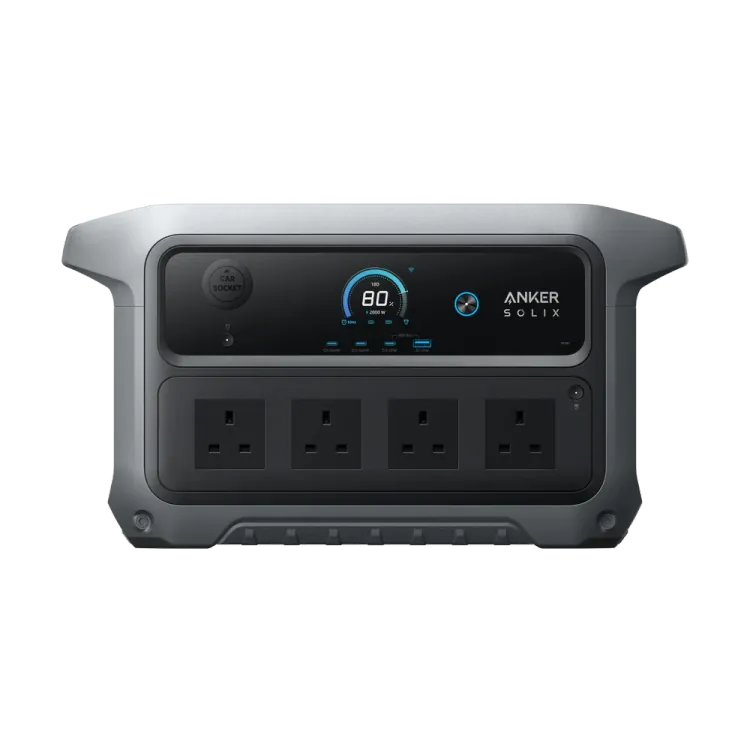
The Anker SOLIX C2000 Gen 2 is designed for users who need more runtime than a typical 1kWh model can provide. Its 2,048Wh battery doubles the base storage of the smaller recommendations, while a 2,400W continuous inverter and 4,000W peak output can support refrigerators, pumps, kitchen appliances, electronics and other demanding household equipment.
Capacity can be increased to 4,096Wh using the compatible Anker SOLIX BP2000 Gen 2 expansion battery. This makes it particularly suitable for overnight outages, longer off-grid stays and users who want to begin with a substantial system while preserving an upgrade path. Four AC sockets, three USB-C ports, USB-A and a car outlet provide practical connectivity.
Despite its capacity, the C2000 Gen 2 can recharge fully in as little as 58 minutes using the specified combined input. It also supports up to 800W alternator charging for motorhomes and extended road travel. A 10ms UPS mode, low 9W standby consumption and LiFePO₄ battery rated for 4,000 cycles reinforce its credentials as a dependable long-duration backup unit.
Why We Chose It:
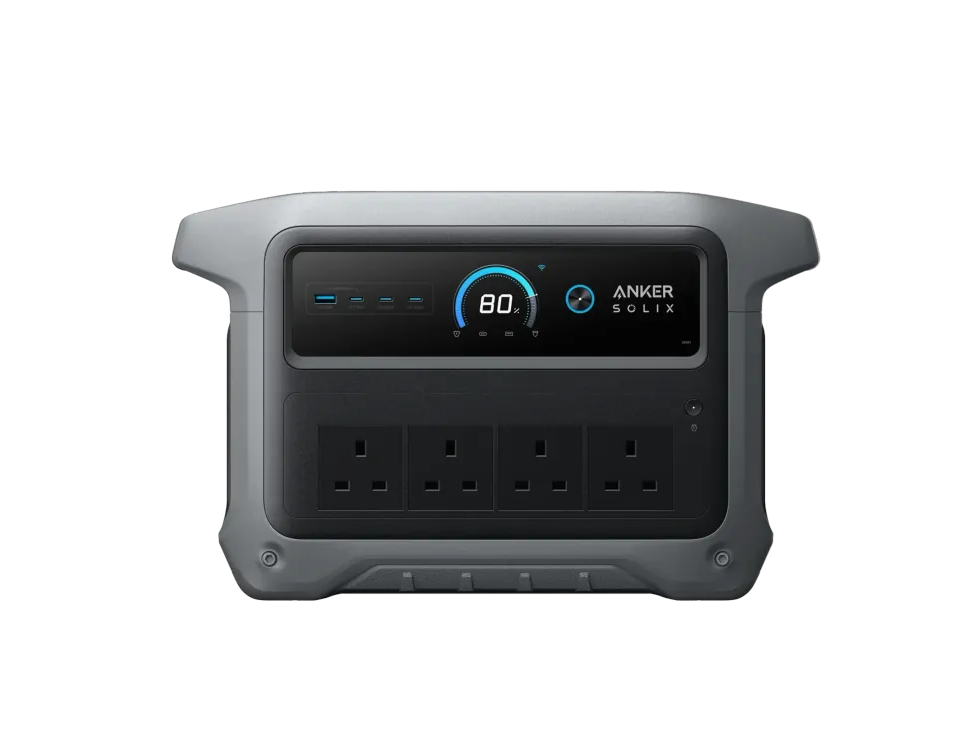
The Anker SOLIX C1000 Gen 2 stands out by pairing a 1,024Wh battery with 2,000W of continuous AC output. This gives it greater inverter power than most models in the same capacity class, making it a strong choice for buyers who need to operate high-demand appliances but do not require the additional weight or runtime of a 2kWh unit.
Its 3,000W peak rating supports compatible loads with higher starting demand, while four AC sockets and five USB connections allow several devices to run simultaneously. The battery uses LiFePO₄ chemistry and is rated to retain more than 80% capacity after 4,000 complete cycles. A transfer time below 10ms also provides rapid backup for suitable equipment.
Charging performance is a major strength. Anker states a typical full AC recharge time of approximately 49 minutes, and the product has achieved a Guinness World Record result under controlled conditions. Up to 600W solar input adds off-grid flexibility. The capacity cannot be expanded, so this model is best for users who prioritise inverter power and charging speed over future storage growth.
Why We Chose It:
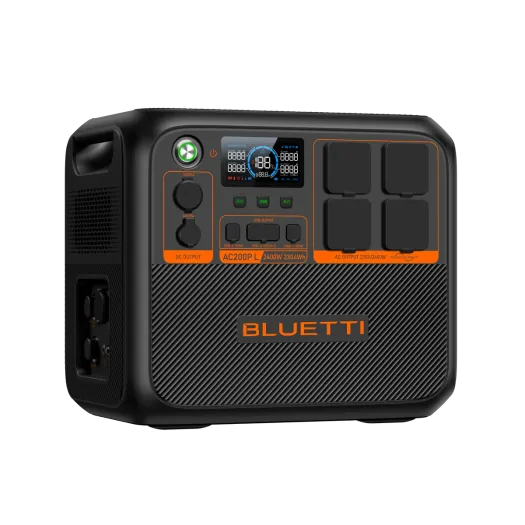
The BLUETTI AC200PL provides one of the most flexible routes from portable power into a much larger backup system. Its substantial 2,304Wh base battery can be expanded to as much as 8,448Wh using compatible BLUETTI B210P, B230 or B300 batteries. This makes it a strong option for extended outages, off-grid cabins, motorhomes and buyers whose energy requirements may increase.
A 2,400W pure sine wave inverter powers most everyday household appliances, while Power Lifting Mode supports selected compatible resistive loads with higher stated requirements. Four AC outlets, USB ports, 12V and 48V DC connections and wireless charging pads provide broad compatibility. An integrated TT-30 connection also adds value for suitable recreational vehicle setups.
Expansion capability does add size and weight. The base unit weighs approximately 28.8kg, so it is better considered a movable high-capacity system than a lightweight power station. In return, buyers receive up to 1,200W solar input, fast mains charging and a LiFePO₄ battery rated for more than 3,000 cycles to 80% capacity.
Why We Chose It:
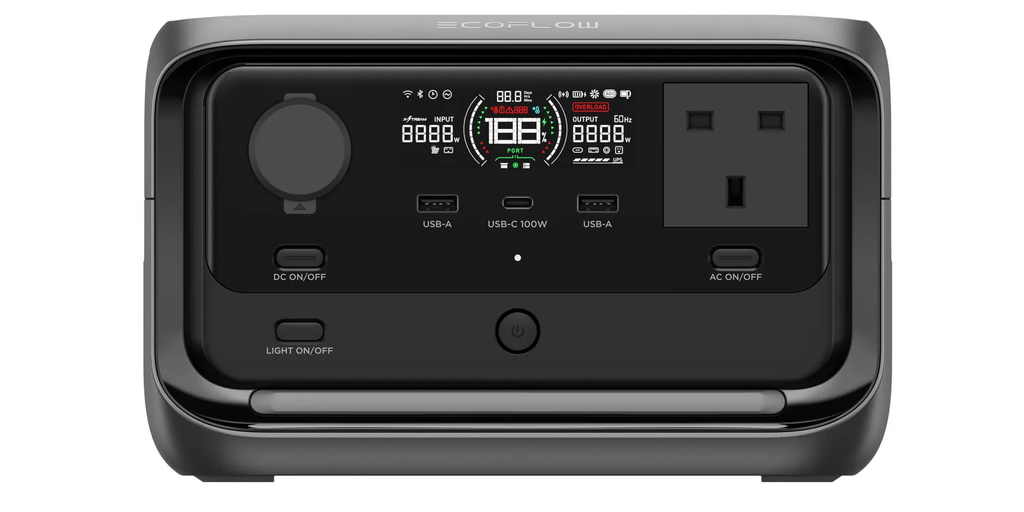
The EcoFlow RIVER 3 Plus is the best choice when portability matters more than maximum runtime. It weighs approximately 4.7kg and stores 286Wh, making it easy to carry for camping, festivals, day trips, mobile work or emergency charging. Unlike many compact models, it still provides a capable 600W AC inverter and three UK sockets.
The unit can operate phones, laptops, cameras, routers, lighting and selected small appliances. EcoFlow's X-Boost mode supports certain compatible resistive equipment with higher requirements, although the normal continuous rating remains 600W. Two USB-A ports, a 100W USB-C port and a car outlet add useful device support.
Capacity can be increased to as much as 858Wh using compatible EcoFlow EB300 or EB600 extra batteries. A full mains recharge takes approximately 60 minutes, and AC, solar, vehicle and generator inputs provide flexible ways to restore energy. Operation below 30dB under specified conditions and a UPS transfer time below 10ms make it useful for bedrooms, home offices and quiet campsites as well as travel.
Why We Chose It:
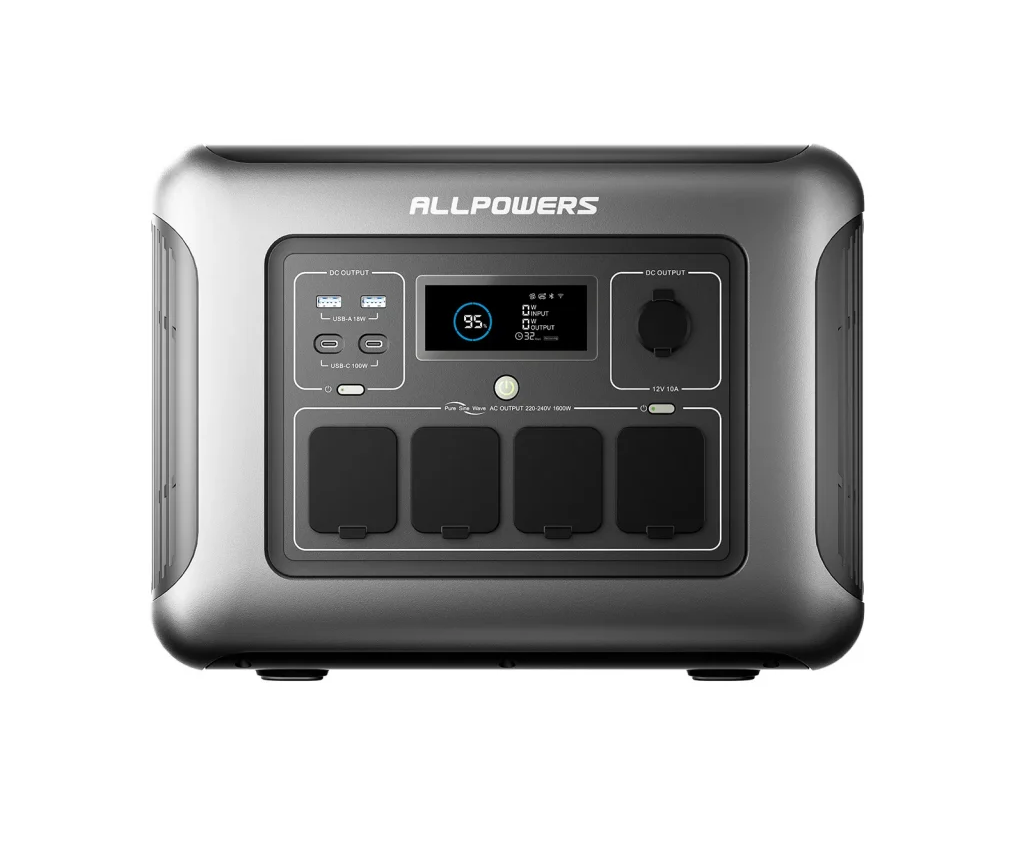
The ALLPOWERS R1500 LITE is a compelling choice for buyers seeking a full 1kWh-class power station without paying for the highest inverter output or fastest charging available. Its 1,056Wh LiFePO₄ battery provides slightly more storage than many direct rivals, while a 1,600W continuous output can run a broad selection of home, camping and mobile-work equipment.
Four AC sockets, two USB-A ports, two USB-C ports and a 12V car outlet allow it to support several devices together. The unit can recharge from AC power in approximately 90 minutes and accepts up to 650W solar input, giving it useful capability for off-grid trips. Quiet operation is rated at approximately 35dB under the stated conditions.
The integrated UPS function adds value for routers, computers and other compatible devices during an outage. It does not provide the premium output of the Anker C1000 Gen 2 or the expansion flexibility of the EcoFlow DELTA 3, but its capacity, port selection and charging capability make it the strongest budget-focused 1kWh recommendation.
Why We Chose It:
For a better understanding of portable power stations before making your purchase, including essential terminology, key features, technical specifications and practical buying advice, explore our Complete Guide To Portable Power Stations.
The best model depends on what you intend to power and how long it must operate. List every essential device, check its running wattage and identify any higher start-up demand. Add together loads that will run simultaneously, then select an inverter with appropriate headroom rather than planning to operate at its maximum rating continuously.
Capacity should be matched to energy use rather than appliance wattage alone. A 2,000W kettle may only run for a few minutes, while a lower-powered fridge, router or medical device may need to operate for many hours. Watt-hours determine runtime, while watts determine whether the appliance can run at all.
Choose the EcoFlow DELTA 3 if you want the most balanced combination of output, capacity, noise, UPS performance and expandability. The BLUETTI Premium 100 V2 is the better value choice when fixed 1,024Wh capacity is enough and rapid solar charging is a priority.
The Anker SOLIX C2000 Gen 2 combines 2,048Wh with a manageable weight, strong output and the option to double capacity. The BLUETTI AC200PL provides even greater expansion for users prepared to accept a heavier base unit.
The Anker SOLIX C1000 Gen 2 provides the highest continuous output among the 1kWh recommendations. Buyers needing both high output and longer runtime should move to the Anker C2000 Gen 2 or BLUETTI AC200PL.
The EcoFlow RIVER 3 Plus is easiest to carry and provides AC sockets in a compact design. Vehicle-based campers with refrigerators and larger appliances may benefit from the extra capacity of the EcoFlow DELTA 3.
The ALLPOWERS R1500 LITE offers a full 1,056Wh battery, 1,600W output and useful solar charging at a lower entry point. The BLUETTI Premium 100 V2 should also be compared closely because its higher output and faster charging may offer better long-term value when pricing is similar.
Portable power technology is developing quickly, but the most useful specifications remain straightforward. Prioritise the features that change what the unit can run, how long it lasts and how easily it can be restored.
The EcoFlow DELTA 3 is our best overall choice because it combines 1,024Wh capacity, 1,800W output, fast UPS switching, quiet operation and expandable storage in a manageable unit. A different model may be better when low cost, compact size or extended runtime is the main priority.
Add the running wattage of devices that will operate together and check for start-up surges. Estimate the energy each device will use in watt-hours, then choose a battery with additional capacity for conversion losses and reserve. Around 1kWh suits many everyday applications, while 2kWh or more is better for longer backup.
A 1,000Wh model can support phones, laptops, routers, lighting and many household appliances for useful periods. Actual runtime depends on average consumption. It may not be sufficient for prolonged heating, air conditioning or several high-demand devices.
Yes, if its continuous and surge output meet the fridge's requirements. Battery capacity determines runtime, while compressor cycling, room temperature and door openings affect actual energy consumption.
Expansion support is valuable when your future energy requirements are uncertain or when longer outages are possible. Fixed-capacity models can offer better value when the original battery is already sufficient.
Yes, where the model supports solar input and the panel voltage, current, connector and wattage are compatible. Solar output varies according to daylight, weather, shade, temperature and panel position.
Many current LiFePO₄ models are rated for 3,000 to 4,000 cycles before retaining around 80% of their original capacity. Reaching that point does not mean the battery stops working, but available runtime will be lower. Temperature, storage and charging habits also affect lifespan.
The EcoFlow DELTA 3 is the strongest all-round recommendation for most buyers, offering a useful balance of battery capacity, inverter power, charging flexibility, quiet operation and expansion. The BLUETTI Premium 100 V2 delivers outstanding value when a fixed 1kWh battery is sufficient, while the Anker SOLIX C1000 Gen 2 is the better choice for maximum output in the same capacity class.
For longer backup, the Anker SOLIX C2000 Gen 2 combines a 2,048Wh battery with strong output, rapid charging and manageable expansion. The BLUETTI AC200PL is the most future-proofed option for users who want to build towards a much larger off-grid or emergency system.
The EcoFlow RIVER 3 Plus covers compact travel and lighter emergency use, while the ALLPOWERS R1500 LITE makes 1kWh-class storage more accessible. Whichever model you choose, compare capacity, continuous output and charging compatibility against your actual equipment rather than relying on the largest headline number.
If you're looking for more advice, explore our Complete Guide To Portable Power Stations at Eco Wizard today. Get a detailed insight into the battery capacities, power outputs, charging options and smart features you need for reliable backup power. You can then browse our Portable Power Stations range to find the right solution for your home, emergency or next adventure.
Prices, availability and specifications may change. Check the individual product page and manufacturer documentation before purchase. Runtimes vary according to connected load, temperature, battery condition, settings and conversion losses. Always confirm that appliance running and start-up requirements remain within the power station's stated limits.