




£25 OFF selected EV charger installations, FREE Salus EV7UK offer & much more
Shop Now

With household budgets still feeling stretched from living costs and global uncertainty, motorists in the UK are quite rightly scrutinising every aspect of vehicle ownership more closely than ever. For electric vehicle drivers, charging costs have become a particular focus, especially as prices can vary significantly depending on where you plug in.
Unlike petrol and diesel, where prices are clearly displayed on a forecourt sign, the cost of charging an electric vehicle can vary significantly depending on where the charging takes place, the type of EV charger being used, and even the time of day. A driver who charges predominantly at home using a dedicated EV tariff may only pay a fraction of the cost faced by someone regularly relying on rapid public charging stations.
As the UK's charging infrastructure continues to expand and electricity pricing becomes increasingly dynamic, understanding how different charging methods affect running costs has become an essential part of EV ownership.
For many motorists, the appeal of electric driving lies in the prospect of lower day-to-day running costs. However, those savings are not automatic...
Electricity tariffs, charging speed, battery size, annual mileage and charging habits all influence the overall cost of ownership. Drivers who fail to consider these factors may find themselves spending considerably more than expected, particularly if they become heavily dependent on premium-priced public charging networks. Making informed charging decisions can have a noticeable impact on annual motoring expenses, often saving hundreds of pounds over the course of a year.
The good news is that EV drivers have more control over their charging costs than ever before. Smart home chargers, off-peak electricity tariffs like Intelligent Octopus Go, and growing access to charging technology are creating new opportunities to reduce energy bills without compromising convenience.
This Eco Wizard guide explores the real-world cost comparison between home EV charging and public charging. You'll discover the factors that influence charging expenses, and the practical ways drivers can maximise the financial benefits of electric vehicle ownership, while keeping long-term running costs under control.
For the majority of UK electric vehicle owners, charging at home remains the cheapest way to power an EV. Domestic electricity tariffs are typically lower than the rates charged by public charging providers, particularly when drivers take advantage of dedicated EV energy tariffs during off-peak hours. Charging overnight allows vehicle owners to access some of the lowest electricity rates available while ensuring the car is ready for use the next morning.
Installing a home EV charger also improves charging efficiency and convenience. Rather than making special trips to public charging locations, drivers can simply plug in at home and let their vehicle recharge automatically. Over the course of a year, these savings can become substantial, especially for motorists covering higher annual mileages.
Key benefits of home charging:
Public charging plays a vital role in supporting the UK's growing electric vehicle market, but convenience often comes at a premium. Rapid and ultra-rapid EV charging stations require significant investment in infrastructure, maintenance, and grid capacity - costs that are often passed on to consumers through higher charging rates.
While public charging can be extremely useful for long-distance travel or emergency top-ups, relying on it as a primary charging method can significantly increase annual running costs. Drivers using ultra-rapid chargers regularly may find their charging expenses approaching or even exceeding the cost of fuel for some highly efficient petrol vehicles, particularly during periods of elevated energy prices.
Factors that increase public charging costs:
One of the biggest advantages of home EV charging is the ability to choose an electricity tariff that suits your charging habits. Several UK energy suppliers - such as OVO Energy and Octopus Energy - now offer EV-specific tariffs with significantly reduced overnight rates, helping drivers lower charging costs even further.
A driver who charges predominantly during off-peak periods could pay considerably less per mile than someone using a standard household tariff or relying on public chargers. Many smart home EV chargers at Eco Wizard can automate charging schedules, ensuring vehicles only charge when electricity is cheapest. This level of control simply isn't available through most public charging networks.
Ways to maximise savings through tariffs:
For more information on smart charging, EV tariffs, and how you can save money, see our Complete Guide To Choosing An EV Charger For Your Home.
While cost is important, convenience remains a major factor in deciding how and where to charge an electric vehicle. Home EV charging offers unmatched flexibility for daily commuting and regular driving routines. Public charging, however, remains vital for longer journeys and drivers without access to private driveways.
Many EV owners adopt a hybrid approach, using home charging units for the majority of their energy needs while relying on public chargers only when necessary. This strategy often provides the best balance between affordability and practicality. So, understanding your typical driving patterns can help determine the most cost-effective charging mix.
Consider the following when choosing your charging strategy:
For common EV charging mistakes that cost you time and money, read our Complete Guide To Choosing An EV Charger For Your Home. Understanding these pitfalls will help you make a more informed decision and avoid unnecessary frustration.
Although installing a home EV charger involves an upfront investment, many drivers quickly recover these costs through lower charging expenses and greater efficiency. A professionally installed charger delivers faster charging speeds than a standard three-pin plug while offering an array of smart features that help optimise your energy use.
For homeowners planning to keep an electric vehicle for several years, a dedicated charger can become one of the most valuable additions to the property. Beyond reducing charging costs, it can improve day-to-day convenience and support future vehicle upgrades as EV technology continues to evolve.
Reasons to invest in a home EV charger:
Installing a home EV charger doesn’t need to be difficult. At Eco Wizard, installations are carried out in partnership with Aero, ensuring a simple and professional experience from start to finish. If you’re unsure about the costs, requirements, or what the process involves, our complete guide to choosing an EV charger for your home lays out everything clearly so you know exactly what to expect.
What We Offer...

These EV chargers combine fast, reliable charging with advanced smart features such as app control, scheduled charging, and compatibility with off-peak electricity tariffs to help reduce charging costs. Many models also offer solar integration, real-time energy monitoring, and seamless connectivity, giving homeowners greater control over how and when they charge their vehicle. With stylish designs and future-ready functionality, these chargers provide a convenient and efficient solution for everyday electric vehicle ownership.
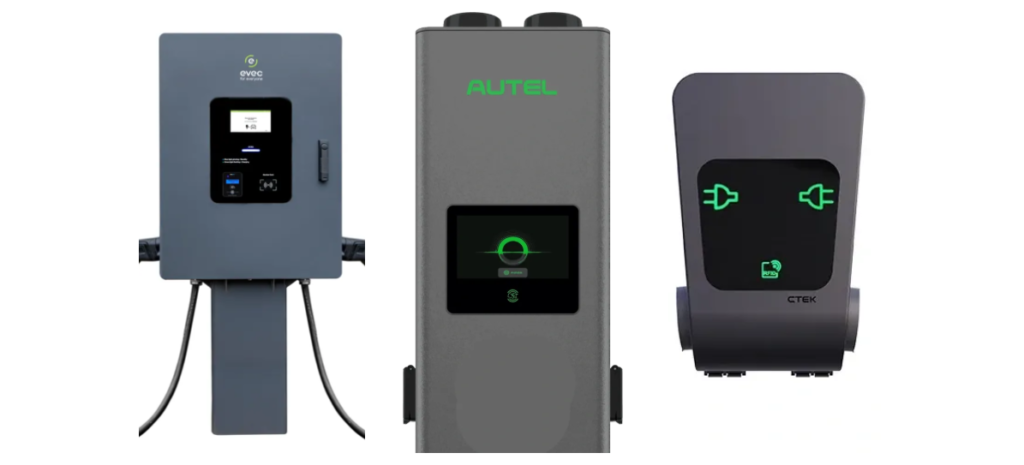
Many models feature future-ready technology such as dual sockets - allowing two vehicles to charge simultaneously. This maximises EV charger availability and improves return on investment. Optional payment integration enables businesses to generate revenue from charging sessions while providing a seamless experience for drivers. Selected public and commercial EV chargers also incorporate intuitive high-definition touchscreen displays, delivering clear charging information, simplified user interaction, and a more professional charging experience for customers and visitors alike.
When comparing home EV charging versus public charging, the numbers clearly favour home EV charging for most UK drivers. Lower electricity rates, access to off-peak tariffs, and the convenience of overnight charging make it the most affordable long-term solution for everyday vehicle use. Public charging remains an important part of the wider EV ecosystem, particularly for long-distance travel, but regular reliance on rapid charging networks can significantly increase running costs.
Investing in a professionally installed home EV charger is often one of the smartest ways to maximise the financial benefits of electric vehicle ownership. By combining efficient charging technology with the right electricity tariff, drivers can enjoy greater convenience, lower energy bills, and substantial savings throughout the lifetime of their vehicle.