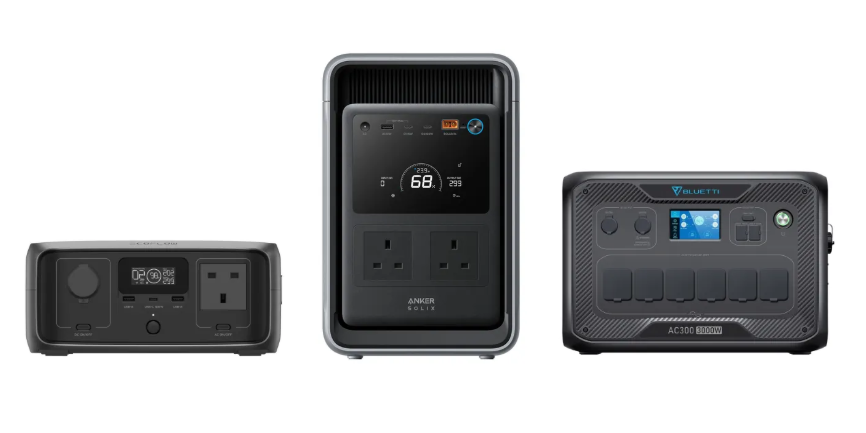
Choosing the right portable power station starts with two vital questions: how much power must it deliver at one time, and how much energy must it store? These may sound similar to you, but they are measured differently and actually determine separate parts of your final buying decision.
Output power is measured in watts and controls which appliances can operate together. Battery capacity is measured in watt-hours and affects how long they can continue running. A portable power station may have a large battery but an inverter that cannot start a demanding appliance, while a high-output model with a smaller battery may run that appliance successfully but only for a short period.
For phones, lights and laptops, a compact unit below 500Wh may be sufficient. Around 1,000Wh provides a practical balance for camping, home electronics and short power cuts. Models with 2,000Wh or more are better suited to longer backup, refrigerators, pumps, several appliances or extended off-grid use. These ranges are only starting points because actual requirements depend on your equipment and intended runtime.
Motor-driven appliances make sizing more complicated. Refrigerators, freezers, pumps and some power tools can briefly demand several times their normal running wattage when starting. The power station must therefore accommodate this surge of power as well as the combined continuous load. Ignoring start-up demand is one of the most common reasons an apparently suitable power unit overloads.
Real-world battery runtime will also be lower than a simple capacity calculation suggests. Inverter conversion, standby electronics, temperature and battery protection all use or reserve some of the stored energy. Leaving a sensible margin helps prevent the battery running flat earlier than expected and provides flexibility if another device needs charging.
In this guide, Eco Wizard explains watts, watt-hours and surge power before walking through a practical portable power station sizing calculation. We'll also recommend the ideal capacity ranges for power cuts, camping, motorhomes, tools and everyday electronics, helping you choose a power station that meets your precise needs without paying for the unnecessary size and weight.
If you want to understand more about how portable power stations work, look into the features that really matter, or delve deeper into recharging methods and recharging speeds, see our Complete Guide To Portable Power Stations.
The right size power station must satisfy both of the following requirements:
The surge output must also be high enough to start appliances containing compressors, pumps or motors. As a practical margin, aim for continuous output at least 20% above the calculated simultaneous load where possible, then choose enough battery capacity to cover energy losses and unexpected use.
A typical buyer may find the following broad capacity bands useful:
Under 300Wh (Lightweight Device Charging):
300Wh to 600Wh (Light Portable Power):
600Wh to 1,000Wh (Medium Portable Power):
1,000Wh to 2,000Wh (General-Purpose Backup):
Over 2,000Wh (Extended/Demanding Use):
These categories describe battery capacity, not inverter output. Always verify both values before purchasing.
Watts measure the rate at which electricity is being used. A 1,500W kettle demands approximately 1,500 watts while heating. If the power station has only a 1,000W continuous inverter, it cannot normally run that kettle even if its battery stores several thousand watt-hours.
Watt-hours measure energy over time. A device using 100W for three hours consumes approximately 300Wh. A 1,000Wh battery therefore stores enough theoretical energy for that load to run for ten hours, but actual AC runtime will be shorter because some electricity is lost during conversion and used by the power station itself.
Kilowatts and kilowatt-hours express the same measurements at a larger scale. One kilowatt equals 1,000W and one kilowatt-hour equals 1,000Wh. A portable power station advertised as 2kWh therefore has a rated capacity of approximately 2,000Wh.
Understanding battery capacity is essential when choosing a portable power station that can meet your energy needs. Our Complete Guide To Portable Power Stations explains how to figure out your power requirements, compare battery capacities and estimate runtimes based on appliance wattage, helping you select a suitable model for your needs.
Continuous output is the maximum power the inverter can supply steadily. Add together the wattage of every device that may operate simultaneously, including equipment that cycles on and off. The total must remain below the power station's continuous rating.
Surge output is a higher level of power available briefly. It helps start equipment with compressors or electric motors, such as refrigerators, freezers, water pumps and certain tools. The start-up demand can be much higher than normal running consumption and may not be shown clearly on the appliance label.
Check the product manual or ask the appliance manufacturer when start-up wattage is unavailable. A plug-in energy monitor capable of capturing peak demand can also provide useful real-world information. Do not assume that a marketing feature for selected resistive loads increases the normal continuous rating for every type of equipment.
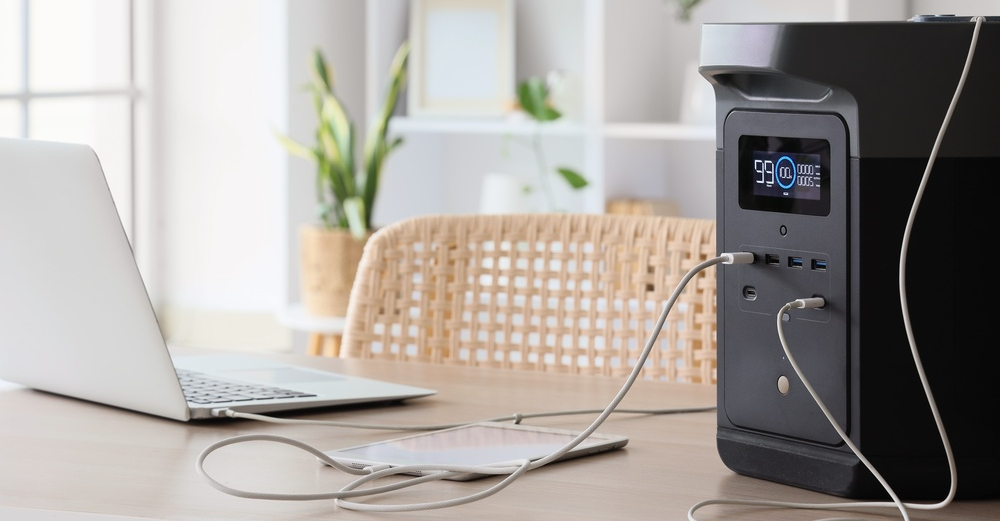
The most dependable approach is to list your equipment and calculate output and capacity separately. This prevents a large battery figure from disguising an unsuitable inverter or a powerful inverter from disguising insufficient runtime.
Begin with essential equipment rather than every electrical item you own. For a power cut, this may include a refrigerator, router, lighting, phones and a laptop. For camping, it may include a 12V fridge, camera batteries, lights and an air pump.
Record whether each device will operate continuously, intermittently or only for a few minutes. A kettle has high power but short use, while a router has low power but may run all day. Both can consume meaningful energy in different ways.
Check the appliance data plate, energy label or manual. Record its normal running wattage and any stated starting, surge or peak demand. Where only voltage and current are provided, multiplying volts by amps gives an approximate apparent power figure, although motors and electronic equipment can make this less precise than a manufacturer-stated wattage.
Use measured consumption where accuracy matters. Appliance labels can show maximum or rated input rather than typical everyday use, while equipment such as refrigerators cycles on and off. A plug-in monitor can record energy over several hours or days and provide a more realistic average.
Add the running wattage of all equipment that may operate simultaneously. If a refrigerator uses 120W, a router uses 15W, six LED lights use 60W together and a laptop charger uses 65W, the combined running load is 260W.
Next, consider the largest additional start-up surge that could occur while those devices are operating. If the refrigerator briefly needs 600W to start, the power station must tolerate that event as well as the other loads. Do not add every surge automatically unless several motor-driven appliances could genuinely start together.
Multiply each device's wattage by the number of hours it will be used:
For equipment that cycles, use its average consumption where available. A refrigerator drawing 120W while the compressor runs may average considerably less over a full day. Annual energy-label consumption can be divided by 365 for an approximate daily figure under the test conditions.
The full rated battery capacity is not normally available to an AC appliance. Energy is consumed when the inverter converts DC battery power into AC electricity, while displays, wireless connections and internal electronics also draw power. Temperature and manufacturer reserve settings can reduce usable energy further.
A practical planning method is to divide the required energy by an assumed efficiency of 0.8 to 0.9, then add a reserve. Using 0.85 provides a reasonable illustration, although actual efficiency varies by model and load:
If the calculated appliance consumption is 850Wh, dividing by 0.85 gives 1,000Wh. Adding a further 20% reserve would point towards a unit around 1,200Wh or the next suitable capacity above it.
Consider a home backup plan with the following estimated use:
Refrigerator (600Wh):
Wi-Fi Router (180Wh):
Four LED Lights (200Wh):
Laptop (195Wh):
Phone Charging (30Wh):
Total Estimated Energy Consumption: 1,205Wh (1.205kWh).
Dividing 1,205Wh by 0.85 to allow for conversion and system losses gives approximately 1,418Wh. Adding a 20% reserve increases the target to around 1,700Wh. A 2,000Wh-class power station would therefore provide a more comfortable fit than a 1,000Wh model for this example.
Output must still be checked separately. The average figures in the table do not confirm the highest simultaneous load or refrigerator start-up surge. If a kettle, microwave or pump is added, the inverter requirement could increase dramatically even if that appliance runs for only a few minutes.
A simplified runtime formula is:
For a constant 100W AC load and an assumed 85% efficiency:
300Wh Battery (2.5 Hours Runtime):
500Wh Battery (4.25 Hours Runtime):
1,000Wh Battery (8.5 Hours Runtime):
2,000Wh Battery (17 Hours Runtime):
3,000Wh Battery (25.5 Hours Runtime):
2,550Wh usable energy, powering a 100W device.
These estimates assume 85% usable battery capacity and a constant 100W load. Actual runtime will vary depending on the power station's efficiency, connected devices and operating conditions.
The following figures are broad planning examples, not guaranteed requirements. Appliance power varies significantly by model, efficiency and operating mode. Check the individual data plate or manual before choosing a power station.
Smartphone Charger (5W to 30W):
LED Light (5W to 15W):
Wi-Fi Router (8W to 25W):
Laptop Charger (45W to 140W):
Television (50W to 200W):
CPAP Machine (30W to 100W):
Portable Fridge (30W to 70W):
Domestic Fridge (50W to 200W):
Microwave (800W to 1,500W):
Kettle (1,500W to 3,000W):
Hairdryer (1,000W to 2,400W):
Power Tool (300W to 2,000W+):
For light emergency support, a 300Wh to 600Wh unit can maintain phones, routers, LED lighting and selected laptops. It is compact and easy to store, but it may not have enough capacity or inverter power for refrigeration throughout a long outage.
Around 1,000Wh is a useful general-purpose starting point for many homes. Models in this class commonly provide 1,500W to 2,000W of AC output, allowing them to run a refrigerator, television, computer or selected kitchen appliance when correctly sized. Runtime remains limited when several loads operate together.
A 2,000Wh or larger power station is better for longer interruptions, fridge freezers, pumps or multiple household essentials. Expansion batteries can add runtime without replacing the main unit. UPS functionality is worth considering if compatible routers, computers or medical equipment must transfer to battery automatically.
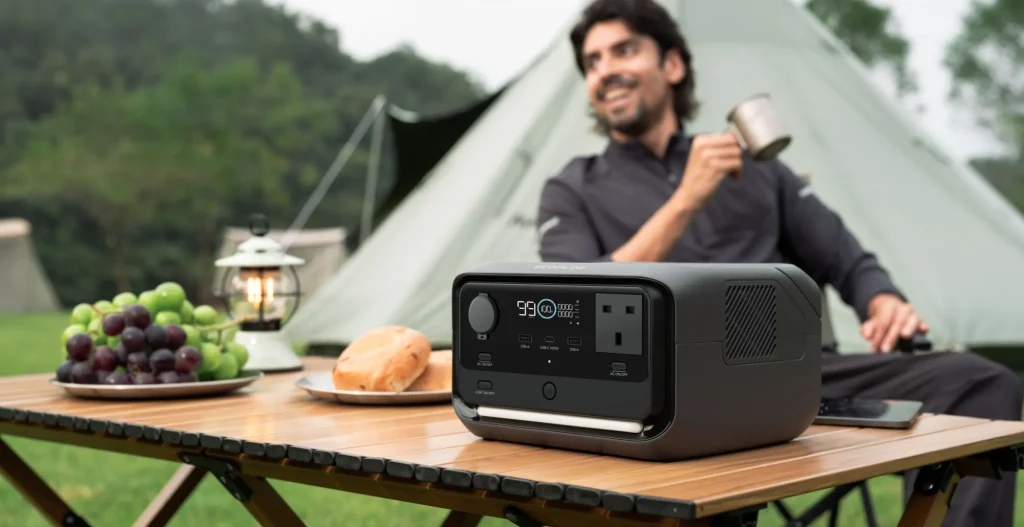
For phones, cameras, rechargeable lights and tablets, a compact model below 300Wh may be enough for a weekend. DC-only units can be lighter and more efficient for USB and 12V devices, but they cannot operate equipment with a standard UK plug.
A 300Wh to 600Wh AC power station adds flexibility for laptops, air pumps, projectors and selected portable fridges. For family trips, longer stays or refrigeration, 600Wh to 1,000Wh provides more confidence without becoming as difficult to transport as a large home-backup unit.
Vehicle-based campers using cooking equipment, several devices or a fridge over multiple days may need 1,000Wh to 2,000Wh. Solar and alternator charging can extend a trip, but input compatibility, daylight and driving time determine how much energy is actually restored.
For more information on the ideal portable power stations for the campsite and off-grid adventures, explore our Best Portable Power Station For Camping guide. We cover the key features, battery capacities and charging options to consider when choosing a reliable portable power solution for your next trip.
Begin with a daily energy budget covering refrigeration, lighting, water pumps, laptops, entertainment and device charging. Add occasional high-power appliances such as kettles, microwaves or coffee machines separately because they influence inverter size even when their total energy use is modest.
A 1,000Wh unit may suit short trips and light electrical use, while 2,000Wh to 4,000Wh offers more flexibility for multi-day travel. Expandable systems are particularly valuable because extra batteries can be added if the original capacity proves insufficient.
Check charging inputs as carefully as outputs. Solar panels can replenish energy while parked, and compatible alternator chargers can recover capacity while driving. The power station's maximum solar voltage, current and wattage must match the proposed panels.
Most fridges require less running power than kettles or heaters, but their compressor start-up surge and long operating time make them significant backup loads. Check the fridge's data plate and, where possible, measure its consumption over 24 hours. Ambient temperature, door openings and appliance efficiency all affect demand.
A 500Wh unit may provide short-term support for an efficient fridge if its inverter accommodates the compressor. Around 1,000Wh offers more useful runtime, while 2,000Wh is better for longer outages or a fridge freezer alongside other essentials. Keeping the door closed reduces compressor activity and preserves cold air.
Power tools should be sized according to the highest simultaneous running load and motor start-up demand. A compact drill charger may need very little power, while a saw, compressor or pump can require a high-output inverter and substantial surge capacity.
For charging cordless tool batteries, a 300Wh to 600Wh unit may be sufficient. Running corded equipment can require 1,000W to 3,000W or more, depending on the tool. Runtime under heavy load can be short even with a large battery, so calculate watt-hours as well as inverter power.
Worksite use may involve additional requirements for weather protection, electrical safety and inspection. Confirm that the power station and connected equipment are suitable for the environment rather than relying on consumer-use specifications alone.
Extra capacity provides longer runtime, but it also increases price, size and weight. A large unit may be awkward to move for camping or occasional device charging, while a small power station is easier to carry and can be more efficient for light DC loads.
Buying slightly above your calculated requirement is sensible, especially when appliances may be added later. Oversizing dramatically can be unnecessary if the unit spends most of its life unused and cannot be transported comfortably. Expandable models offer a useful compromise by allowing capacity to grow without replacing the original power station.
Output should not be oversized blindly either. A powerful inverter does not create extra battery energy, and running heating appliances can still empty a high-output 1kWh unit quickly. Match both figures to real use.
It can be enough for phones, laptops, lighting, routers, selected camping equipment and short fridge support. It is unlikely to provide long-duration home backup or run high-power heating appliances for useful periods.
Around 1,000Wh is a practical general-purpose size for camping, home electronics and essential backup. With an appropriate inverter, it can operate many household appliances. Runtime depends on the combined average load.
A 2,000W inverter can operate appliances whose combined continuous demand remains below its rating and whose start-up surge remains within its peak limit. This may include refrigerators, microwaves, coffee machines, tools and electronics, but each appliance must be checked.
A 20% reserve above the calculated requirement is a useful starting point, after accounting for conversion losses. More may be appropriate for medical equipment, uncertain loads, cold conditions or future expansion.
Check its data plate, energy label, manual or manufacturer website. A plug-in power meter can show real consumption for compatible AC appliances and is especially helpful for equipment that cycles.
Only if the power station supports compatible expansion batteries. Compatibility is model-specific, so check which batteries are approved and the maximum total capacity before purchase.
Choose AC sockets for standard UK plug-in appliances. USB and regulated DC outputs can be more efficient for compatible phones, laptops, camping fridges and vehicle equipment because they avoid or reduce inverter conversion.

The correct size is not the model with the largest number on the box. It is the power station that's continuous and surge output can start every required appliance, and whose usable battery capacity can supply those appliances for the intended period.
For light electronics, a unit below 500Wh may be ideal. Around 1,000Wh covers a broad range of camping and backup requirements, while 2,000Wh or more provides greater resilience for longer outages, refrigeration and several household loads. Expansion support is worth prioritising when future use is uncertain.
List your equipment, check its actual wattage, calculate watt-hours and add a realistic margin before comparing models. This simple process produces a far more dependable result than choosing by capacity, output or price alone.
Appliance wattages and runtime figures in this guide are illustrative. Actual consumption, start-up demand and efficiency vary by product, settings, temperature and operating conditions. Check all manufacturer specifications before use and do not rely on a consumer portable power station as the sole backup for life-support equipment.
Looking for more advice before choosing a portable power station? Explore our Complete Guide To Portable Power Stations for a closer look at battery capacities, power outputs, charging options and essential unit features for reliable backup power. Once you know what to look for, browse our Portable Power Stations range to find the right solution for your home or next adventure with Eco Wizard.